The First-Week Wave: How to Introduce Yourself to New Neighbors Without Making It Awkward
A small, friendly introduction during your first week sets the tone for years of hallway encounters. Here is how to do it without making either of you uncomfortable.


You have signed the lease, the boxes are mostly unpacked, and you have just noticed that the people who live across the hall are home. You can hear their kettle. You can hear their dog. They have probably already noticed you. The question that suddenly feels much bigger than it should is simple. Do you knock now, wait a week, or just hope to bump into them in the elevator one day?
This is the moment where most of us flinch. The first week in a new building is the easiest time to introduce yourself, and it is also the time when we are most exhausted and least likely to do it. A few small habits, learned ahead of time, make it kinder for everyone involved.
Why the first week matters more than the second
During the first week, you have a built-in reason to say hello. You are new. They know you are new. Anything you say is forgiven in advance, because both of you understand the context. By the third week, the moment has passed. You are no longer the new person. Knocking on a door to introduce yourself then feels strange and possibly a little intense.
If you wait, you will still meet your neighbors eventually, but you will meet them in random, slightly unequal ways. You will be carrying a recycling bag. They will be coming home from a tough day. Neither of you will feel ready for the introduction. The first week removes that pressure because it is the obvious moment for a short, friendly exchange.
The first week is also when people are most curious about you. They have seen the movers, heard the small noises, and noticed a new name on the buzzer. A short hello answers a question they were going to ask themselves anyway.
What to actually say
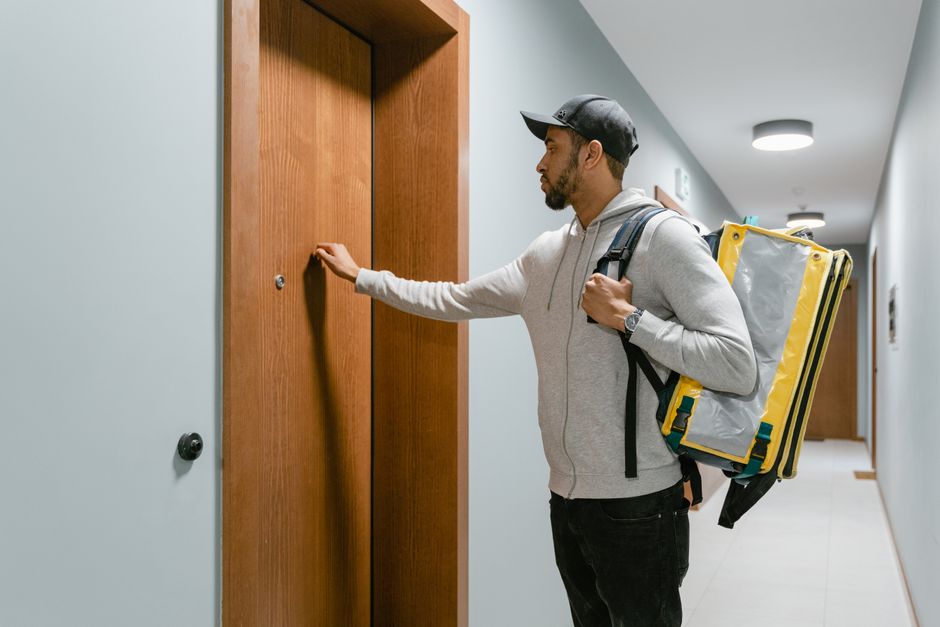
Forget elaborate scripts. The line that works in almost every situation is the simplest one. Something like, “Hi, I just moved in across the hall. I wanted to say hello and apologize in advance for any moving noise.” That is it. You have introduced yourself, signaled awareness of the building, and given them an easy way to either start a real conversation or accept the hello and move on. Reference: the Emily Post Institute’s etiquette guidance on introductions.
If they keep the conversation going, you can mention your name, where you moved from, and that you are still finding your bearings. If they wrap it up quickly, that is also fine. Some people are introverts. Some people were on their way to the bathroom. Their tone is not a verdict on you.
It helps to do this when you are visibly carrying something neutral. A bag of groceries, a recycling bin, your laundry. It signals that you are mid-task and not staging an interaction. People are more relaxed when the encounter feels accidental even though both sides know it is mildly planned.
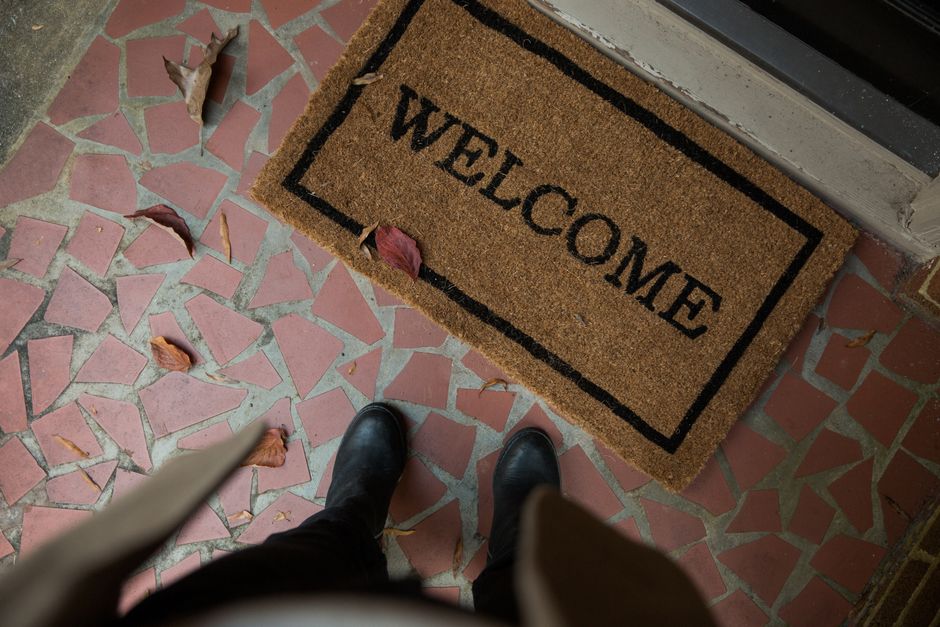
If you have a doormat or a small plant outside your door, put it out by day three. It makes your unit feel inhabited and it gives neighbors a non-verbal cue that the new person is settled in. Several editors here noticed they got more friendly hallway nods in the weeks after they added a small visual marker outside their door.
The mistakes that make this awkward
The biggest mistake is over-preparing. Some people decide they need to bake cookies, write a note, and ring the doorbell of every neighbor on the floor. This usually backfires because it raises the stakes of a moment that should be low-key. The cookies sit uneaten because the neighbor is on a diet, the note feels formal, and the doorbell visit feels like a salesman.
The second mistake is the opposite. Some people decide the introduction is impossible and they avoid the hallway for a month. They do not check the mail when they hear footsteps. They wait until the elevator is empty to leave. By the time they finally see a neighbor, it has been long enough that any introduction would feel strange. Avoidance compounds.
The third mistake is talking too much during the first meeting. A first hello should last under two minutes. Anything longer and the neighbor begins to wonder when they will get back to whatever they were doing. Keep it short. The real friendship, if there is one, happens later in the small repeated greetings.
The patterns that build long-term goodwill
Once you have introduced yourself, the rest is about small repetition. You do not have to become close friends with the people on your floor. You only need to be the kind of neighbor who is consistently present in a low-key way. Here are the patterns that quietly do the work over years:
- Hold the elevator if you see someone walking up.
- Hold the front door for the person two paces behind you, but not for a complete stranger you do not recognize.
- Say a clear hello when you cross paths in the hallway, even if it is just a nod.
- Bring up a neighbor’s name in your second or third conversation. It signals you remembered.
- If you walk past their door and hear a small problem (a smoke alarm, a leak), knock. They will remember it for years.
- If they ask you a small favor, say yes if you reasonably can. If you cannot, say so kindly without inventing a story.
What about apartment buildings where nobody talks?
Some buildings, especially in dense cities, have a culture where introductions are rare. You can still introduce yourself, but the response will be quieter. A short nod, a soft hello, maybe a few words about the building. That is the full conversation in that culture. It is not unfriendly. It is the building’s specific language.
In those buildings, the introduction is more about giving your neighbor permission to acknowledge you in the future. Once you have said hello, they will recognize you. They will hold the elevator. They will not avoid eye contact. It is a small but real shift, even if the exchanges always remain brief.
The opposite is also true. In a smaller building, especially a walk-up or a co-op, people may expect a longer introduction. You may end up chatting in the hallway for ten minutes. Read the building you are in and adjust. The goal is not to follow a universal script. It is to fit gracefully into the social temperature of the place you now live.
When the introduction does not happen at all
Sometimes it just does not work out. You moved during a difficult week, your neighbors travel, or your schedules are opposite. By the time you have a quiet moment, two months have passed. Do not force a delayed introduction. Instead, use the next natural moment. Hold the door. Ask a small practical question about the trash room. Comment on the weather while you are both waiting for the elevator.
Within a few of those tiny exchanges, you will be a known neighbor again. The introduction will have happened, just in pieces, the way most adult friendships actually form. The first week is the easiest moment, not the only one.
Frequently asked
Should I bring food when I introduce myself?
You do not need to. A small empty-handed hello is friendlier than an expectation-laden gift. If you genuinely want to bring something, choose a low-stakes item like a small bag of coffee or a wrapped piece of bakery bread, not a full meal.
What if I do not know which neighbors to introduce myself to?
Start with the people sharing a wall, the unit directly above or below, and the unit across the hall. Those are the relationships that will affect your daily life. The rest of the building can wait until you bump into them.
Is it strange to introduce myself if I have been here a month already?
It is a little late but not strange. Use a natural moment like holding the elevator or asking a quick building question, and mention that you are still relatively new. Skip the formal knock on the door.
My neighbor barely responded. Did I do something wrong?
Almost certainly not. Some neighbors are simply private or had a long day. The first hello is rarely a friendship. It is a small social opening that the relationship can grow into over time.
Related guides
 Neighbor Etiquette
Returning a Lost Package the Right Way
A misdelivered package is one of the smallest, friendliest social moments in shared living. The way you return it sets…
 Neighbor Etiquette
Saying Hello in the Hallway: A Surprisingly Hard Skill
The hallway hello looks easy in theory and surprisingly tricky in practice. A grounded look at how to make it…
 Neighbor Etiquette
When Their Dog Barks All Day: A Calm Path Forward
A neighbor's dog barking through your workday is one of the most common shared-living frustrations. There is a calm, repeatable…