When Your Children and Theirs Are Suddenly Friends
Two kids deciding they are best friends within a week brings two adult households into a relationship neither of them planned. Here is how to make it work.


One Saturday morning, my eight-year-old came in from the front yard and told me, with the certainty only an eight-year-old can have, that the new boy across the street was now her best friend. They had played together for forty minutes. I had never spoken to his parents. By the next weekend the two of them were inseparable, and his mother and I were waving at each other from across the cul-de-sac with the slightly forced enthusiasm of two adults who had just been drafted into a relationship.
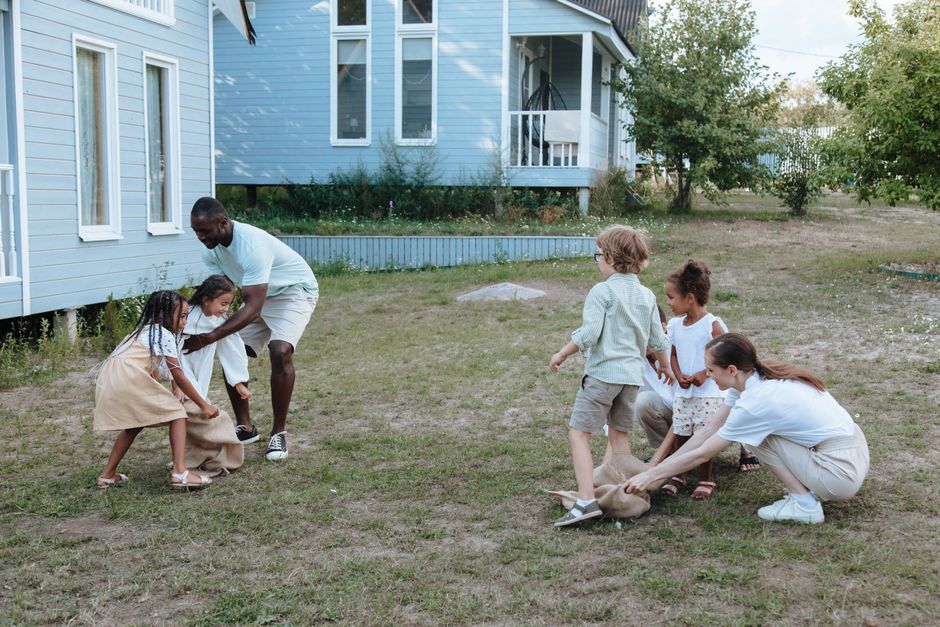
This is one of the most common quiet surprises of community living. The children decide. The adults then have to figure out how to share schedules, snacks, screens, and yard space with people they did not choose. It can be lovely. It can also become heavy if the adult side is not handled with a little care.
Make the first adult contact small
The temptation when the children become inseparable is to schedule a family dinner. Skip that for the first few weeks. A long shared meal between two unfamiliar adult couples is high-pressure for everyone. Start small. Wave when you see them at the door. Cross the street to introduce yourself when you see them outside. Exchange phone numbers casually with the line, “In case we need to coordinate the kids.”
That single phone exchange handles ninety percent of what comes next. You can text about pickup times. You can ask whether your child can stay another hour. You can warn them that yours has a peanut allergy. The relationship has a working channel without having to be a friendship yet.
The schedules question
Once two children are friends, the request pattern starts. “Can I go over?” “Can he come over?” “Can we go to the park?” Most parents say yes more often than they planned to. That is fine, but it works better when both households have a rough sense of which times are open and which are not.
The kindest version of this conversation is the simple one. Tell the other parent your normal rhythms. “We do family dinner around six on weekdays, and weekends after ten are usually open.” That single sentence saves dozens of awkward declines later. You are not setting rules. You are sharing a calendar. The other parent will probably do the same.
It also helps to agree on a default. Many neighborhood friendships work best when the children play between four and six in the afternoon, then go to their own homes for dinner. That is a working pattern in many cultures and it removes the daily renegotiation. Each family eats together. The friendship does not get heavy. Everyone wakes up Monday morning still glad it exists.
When you tell another parent that their child can come over “anytime,” you are inviting them to read your culture from a sentence. Some families will hear that as a once-in-a-while open door. Others will hear it literally. Use a specific phrase instead, like “weekday afternoons after homework” or “weekend mornings after nine.” Specifics save you.
Snacks, screens, and the rules question
Every household has small rules that the children pick up on quickly. One house allows screen time after homework. Another does not allow screens at all on weekdays. One serves snacks freely. Another sticks to set meal times. None of these are wrong. They are simply different. The children will compare notes and report back. “At Sam’s house we can watch shows after lunch.” Reference: the American Academy of Pediatrics’ HealthyChildren guidance for parents.
You do not have to match the other family. You only have to be clear in your own home and be open about your defaults when the other child is over. A short conversation in the kitchen does it. “We do screens after dinner here, but you can play upstairs until then.” Children adapt to house rules faster than adults expect. The trick is to state them lightly and once, not repeatedly.
It is also worth a short mention with the other parent about food. Allergies, dietary preferences, what your family does and does not buy. The text version is fine. “Quick thing, our snacks are usually nuts-free and we do not really do soda. Just so you know if Sam wants something while he is here.”
When the friendship intensity is uneven
Sometimes one child is more invested than the other. Yours is asking every day. Theirs is more relaxed about it. Or vice versa. Adults can quietly help here. Encourage the less-invested child’s hobbies. Praise their other friendships. Resist the urge to engineer the situation into a more even one. Children’s friendships ebb and flow. Trying to force a balance often backfires.
If one family becomes a frequent host while the other rarely returns the favor, the imbalance can quietly become a problem. The hosting family does not say anything because they feel awkward, but a small resentment forms. The fix is simple. Take a turn. Offer a sleepover at your house. Drive both children to a park. Pay the entry fee for a small outing. You do not have to match every visit. You only have to participate.

The conversations to have early
If the friendship lasts past the first month, a few short conversations are worth having with the other parents:
- How do you handle pickup if our child is at your house for dinner?
- Are there activities you would prefer they not do together, like watching certain shows or going to certain places?
- What is your rule about leaving the yard or the street?
- If our kids fight, do you want us to step in or let them work it out?
- Are you comfortable with sleepovers, or would you prefer not yet?
None of these need to happen in one conversation. They come up naturally over a few weeks. The point is that both sides know each other’s defaults before a hard moment arrives.
What if you do not like the other parents
This is the case nobody likes to talk about. The kids are close. The adults are not really clicking. The other parents have a worldview or a parenting style or a personality that does not fit yours. The temptation is to engineer a quiet drift in the friendship. Do not. Children deserve their friendships, even when their parents do not deeply enjoy each other.
Instead, keep the adult relationship to the working level. Coordinate the kids. Stay polite. Do not pretend at intimacy that is not there. You can be a calm, friendly, distant neighbor and still let two children have a real friendship. They will not need the adults to be best friends to feel that the connection is supported.
The quiet upside
When children become friends with the kids next door, the whole street softens. People wave more. Cars slow. Front yards become small playgrounds. Adults learn each other’s names by hearing their children say them. Even when the children eventually outgrow the friendship, the adult relationships that grew up around it usually remain. That is the real reward, and it is worth the few small early conversations that get you there.
Frequently asked
What if I do not feel comfortable with my child being unsupervised at the neighbor's home?
Start with shorter visits in your own home or in shared outdoor spaces. Over a few weeks, you will have a much clearer sense of the other family's rhythms and you can decide whether a longer stay feels right. There is no obligation to rush.
How do I gently say no to a playdate request?
A short, specific reason works best. "We have family time tonight" or "He has homework to finish." Avoid making it sound like the neighbor's child is the problem. A specific decline today preserves the friendship for tomorrow.
What if the other parent has a very different parenting style?
Make peace with the fact that your child will see other styles. Children handle this well when adults stay calm about it. Address only what affects your own household and let the rest go.
Should we exchange holiday gifts?
Optional. If you do, keep it small and consistent. A baked good or a wrapped book is plenty. Big gifts can pressure the other family into reciprocating beyond what is comfortable.
Related guides
 Neighbor Etiquette
When Their Dog Barks All Day: A Calm Path Forward
A neighbor's dog barking through your workday is one of the most common shared-living frustrations. There is a calm, repeatable…
 Neighbor Etiquette
The First-Week Wave: How to Introduce Yourself to New Neighbors Without Making It Awkward
Meeting new neighbors during the first week sounds simple until you are standing in the hallway with a casserole, second…
 Neighbor Etiquette
Returning a Lost Package the Right Way
A misdelivered package is one of the smallest, friendliest social moments in shared living. The way you return it sets…