How to Hang Things on a Plaster Wall Without Losing Your Deposit
You can hang almost anything in an apartment without sacrificing your deposit. The key is choosing the right method for the wall you actually have.

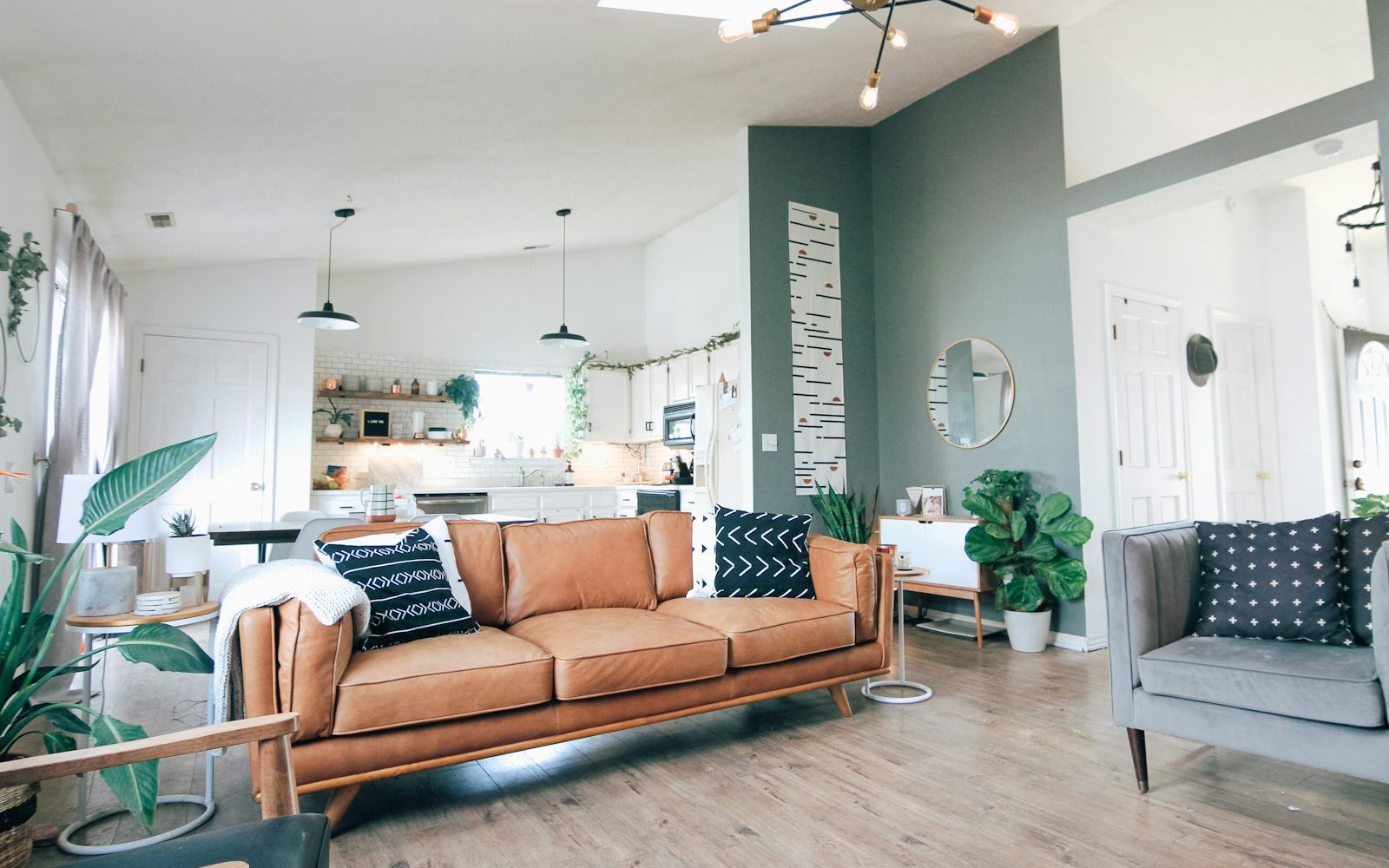
The good news is that you can hang almost anything in a rental without losing your deposit. Even on plaster. Even on the brittle, finicky plaster of a hundred-year-old building. The trick is to use the right method for the wall you actually have, and to know the small repair techniques that handle the mistakes you will eventually make anyway.
Identify your wall first
Before you do anything, identify your wall. Tap on it with your knuckle. Drywall sounds hollow and thuds back slightly. Plaster sounds dense and crisp. If you can find a spot where you can see behind a faceplate (like an electrical outlet), the difference is also visible. Drywall is grey-brown paper-faced. Plaster is white and has a fibrous or sandy texture.
Most apartments built after 1960 are drywall. Most apartments built before 1950 are plaster. The 1950s are a transition era and units from that period could be either. Older buildings that have been renovated may have plaster on some walls and drywall on others.
Drywall: the easy case
Drywall is forgiving. It holds nails and screws well, and small holes are easy to fix. For most apartment uses:
- Light items (under 10 pounds): a single nail or pin works.
- Medium items (10 to 30 pounds): use a plastic anchor (the kind you tap in with a hammer or screw in with a screwdriver).
- Heavy items (over 30 pounds): use a toggle anchor or attach to a stud.
Studs (the vertical wooden beams behind the drywall) are usually spaced 16 inches apart. A magnetic stud finder or an electronic one helps locate them. Hanging into a stud is the strongest possible mount and supports almost any reasonable load.
For art that is not particularly heavy, picture-hanging strips (the adhesive kind made by 3M and others) work beautifully on drywall and leave no holes when removed correctly. They are the renter’s best friend for gallery walls.
Plaster: the careful case
Plaster is harder. It is brittle, prone to cracking, and much less forgiving of mistakes. The good news is that with the right method, plaster holds weight extremely well, even better than drywall. Reference: the EPA’s information on lead-safe practices in older housing.
For light items on plaster, use the same picture-hanging strips. They work on plaster as long as the wall surface is smooth and clean.
For heavier items, the key technique is to drill rather than nail. A drill with a small masonry or carbide bit creates a clean hole without cracking the surrounding plaster. A nail, by contrast, pushes the plaster outward as it goes in, which is what causes the crumbling sound and the chunk-falling result.
The sequence on plaster: mark your spot, predrill a small pilot hole, insert a plaster-specific anchor (the soft plastic ones with wings, or the metal ones with toggles), then drive the screw. This sequence almost eliminates the crumbling problem.
Before drilling into plaster, put a small square of painter’s tape over the spot where you will drill. The tape stabilizes the surface and prevents the small chips that often happen when a drill first contacts plaster. After drilling, peel the tape off and the hole is clean.
The tools worth owning
A small toolkit makes apartment hanging much easier:
- A small power drill with a few drill bits (3/32, 1/8, 1/4 inch).
- A pack of picture-hanging strips in multiple sizes.
- A small box of plastic drywall anchors.
- A pack of toggle bolts for heavier items.
- A level (or a level app on a phone).
- A stud finder.
- A small tube of joint compound or spackling paste.
- A small sanding block.
Total cost for this kit is around $50. It pays for itself within the first apartment.
Heavy mounts and the safety question
For heavy items (TVs, mirrors, large shelves), the rules are different. A 60-pound TV on the wrong mount can pull out, fall, and cause serious damage. For any TV or large mirror, mount into a stud. Use a properly rated mount. Verify the mount’s load rating exceeds the item’s weight by a comfortable margin.
If you cannot mount into a stud, use a heavy-duty toggle bolt rated for the weight. Multiple toggle bolts across a wider mounting plate distribute the load. Do not rely on a single anchor for any item over 25 pounds.
For shelves, mounting brackets into studs is far stronger than into anchors. If the studs are not in the right place, use multiple anchors spaced across the bracket. A long shelf with anchors at each end and one in the middle holds a remarkable amount of weight.
The patch-up
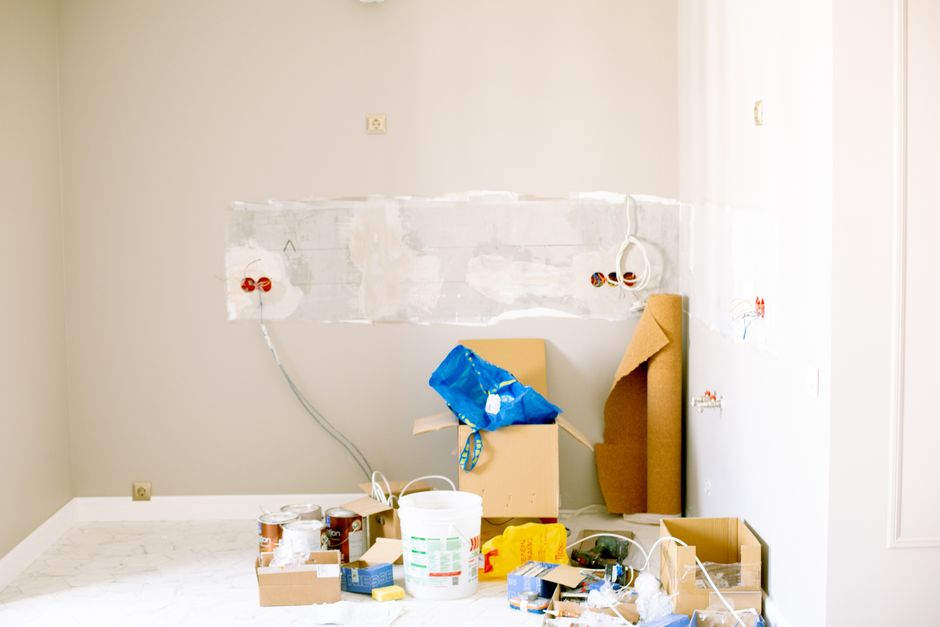
If you damage the wall, repair it before you move out. Small holes are surprisingly easy to fix.
For drywall, small nail or anchor holes can be filled with a tiny amount of spackling paste, smoothed with a finger or a putty knife, allowed to dry, sanded lightly, and painted. Most renters can do this in five minutes per hole.
For larger drywall holes (the size of a fist or larger), a self-adhesive mesh patch covered with joint compound, sanded, and painted, restores the wall. This is a 30-minute job per hole.
Plaster repair is similar but uses plaster patching compound, which dries harder and matches the surrounding wall texture better. Small chips can be filled with patching compound, sanded, and painted. Larger holes may need a backing material (a small piece of metal mesh) before the compound goes in.
The key for both materials is to do the repair well in advance of your move-out, not the night before. Plaster and joint compound take a day to fully dry, and you want time to sand and touch up the paint if needed.
The paint touch-up
The hardest part of wall repair is matching the paint. If your apartment has clearly identified walls (white, beige, etc.), the building may have leftover paint in storage. Ask. Many buildings keep the original paint for exactly this reason.
If you cannot get the original paint, take a small sample (a chip of dried paint from a hidden spot) to a paint store. They can color-match it within a few percentage points. For a typical wall, the match will be invisible after the touch-up dries.
Touch-up technique matters. Use a small brush or roller. Feather the edges of the touched-up area into the surrounding paint. Do not paint a rectangle of new paint over the patch. Feathered edges blend invisibly. Sharp edges always show.
What the lease says
Read your lease for the rules about hanging. Some leases prohibit any nails. Some allow nails but require you to fill them at move-out. Some require landlord permission for any wall modifications.
If your lease prohibits hanging, the picture-hanging adhesive strips become essential. They leave no holes. You can decorate an entire apartment without violating the lease.
If your lease allows hanging but requires repair, plan ahead. Schedule a wall-repair day before move-out. Touch up the paint where needed. Document your repairs with photos. A well-repaired wall almost never results in a deposit deduction.
The freedom you build
A renter who knows how to hang things well lives in a more personal apartment. Art on the walls, shelves above the desk, a mounted TV, framed photos in the hallway. None of these require owning a home. They require a small toolkit, a careful approach, and the willingness to do a few small repairs at the end. The wall is yours during the lease. Use it.
Frequently asked
Will picture-hanging strips really not damage the wall?
When removed correctly (slowly, pulled straight down), they leave no marks on most walls. On older painted plaster, sometimes a small paint peel happens. Test on an inconspicuous spot first.
How do I find a stud in a plaster wall?
Electronic stud finders sometimes struggle with plaster. A magnet (a strong rare-earth one) can find the nails in the lath behind plaster, which mark the studs. Or knock along the wall and listen for the denser sound that indicates a stud.
Can I install a TV mount in a rental?
Usually yes, but check your lease. You will need to repair the mounting holes at move-out, which is straightforward for drywall and a bit harder for plaster.
What if I damaged the wall and cannot match the paint?
A good color match plus feathered application makes most touch-ups invisible. If the touch-up is visible, repainting the entire wall is a reasonable backup. Cheaper than a deposit deduction.
Related guides
 Apartment Living
Childproofing a Rental Without Losing Your Deposit
Childproofing a rental puts two goals in tension. You want the unit as safe as possible for a small child,…
 Apartment Living
Pest Control in a Mid-Rise Building, in Plain Language
Pest control in an apartment building is more about prevention and patience than dramatic intervention. A calm look at what…
 Apartment Living
Storage in Six Hundred Square Feet, Without the Hacks
Real apartment storage in a small unit is more about culling than clever furniture. A grounded look at what works…