Elevator Etiquette in a Building With Long Waits
Elevators are confined social spaces with their own etiquette. In buildings with long waits, the rules tighten and the small breaches get noticed.


Elevator etiquette in apartment buildings is mostly common sense, but the small details matter more than people think. In buildings with long waits, the etiquette tightens because the cost of any inefficiency is shared by everyone behind you. Here are the rules that experienced residents follow, mostly without thinking about it.
The exit-first rule
The most universal rule of elevator etiquette is that people exit before people enter. Standing back when the door opens, letting the exiters off, then entering. This is faster, less awkward, and the standard practice in most cultures.
The violation pattern is people who crowd the entrance the moment the door opens. They block the exiters. The brief obstruction extends the cycle by ten or fifteen seconds, which sounds small but compounds across dozens of trips per day.
The fix is to step back when the door opens, even if you are first in line. Let people off. Then step in. The whole transition is faster and friendlier.
The hold-the-door question
Holding the elevator door is a polite reflex. In a building with no waits, holding for someone visibly approaching is the right move. In a building with long waits, the math is different.
Hold for someone clearly approaching. Do not hold for someone who is not yet at the elevator bank. Do not hold for an extended period (more than ten seconds is too much). The people inside the elevator are being delayed for the person you are holding for. Their time matters too.
If someone runs up at the last moment as the door is closing, the choice is yours. Holding is friendly. Letting it close is also acceptable, especially if they did not signal their approach. Neither is wrong.
The door-close button in most modern elevators does very little. It is intentionally slow or disabled in many buildings for accessibility reasons. Pressing it repeatedly will not speed up the elevator. Accept that the door closes on its own schedule and stop pressing. Reference: the U.S. Access Board’s ADA Accessibility Standards, which set minimum door-hold timings for passenger elevators.
The crowding question
How many people fit in an elevator? Technically, more than is comfortable. Socially, less than the technical maximum.
The general rule: leave personal space when possible. If a few people are already in the elevator and the comfort level is full, the next arriving group can wait for the next car. This is especially important for groups with bulky items (strollers, large packages, dogs, multiple suitcases).
In peak hours, the rule relaxes. A crowded elevator at 8 in the morning is normal. Everyone is doing their best with limited time. Patience and minimal contact are expected.
The floor-button etiquette
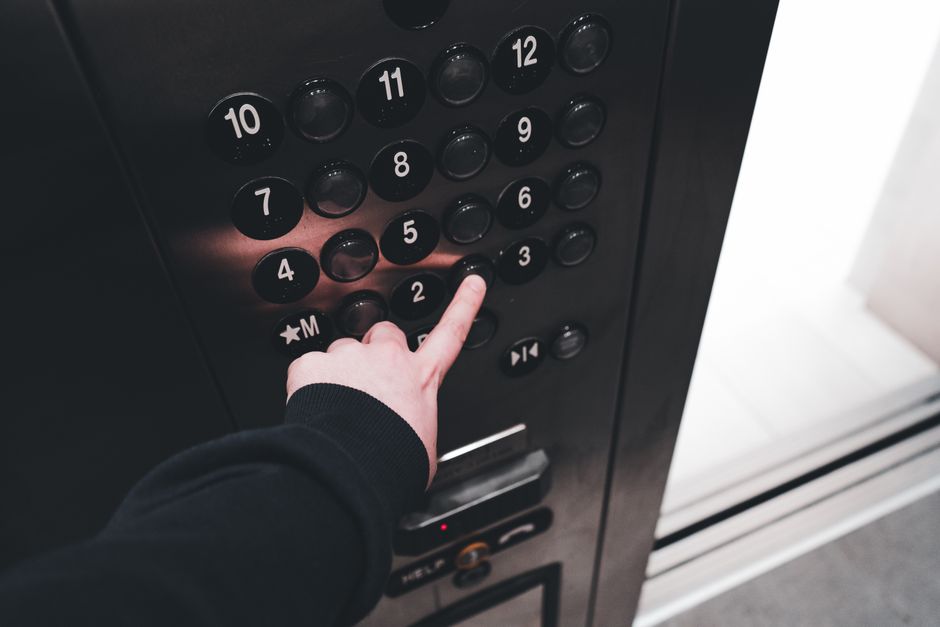
The person closest to the buttons usually offers to press for others. “What floor?” is a small kindness. Most residents appreciate it.
If you are not near the buttons, mention your floor as you enter. “Five, please” gives the person near the buttons clear information. They press it. Done.
Pressing a button repeatedly does not make the elevator faster. Once is enough. If the light comes on, the floor is registered.
The phone-call and audio question
Elevators are tight social spaces where any audio is amplified. Phone calls in elevators are uncomfortable for everyone else. Even brief calls fill the space with one side of a conversation that other riders cannot avoid.
The polite move is to wait until you exit the elevator before taking or making a call. If you are on a call when the elevator arrives, finish it before entering or step out and call back.
Music and videos without headphones are similar. Headphones only. The whole elevator does not need to be part of your audio choice.
The conversation question
Brief conversations in elevators are fine. A hello, a comment on the weather, a brief building update. These take fifteen seconds and end naturally when the ride ends.
Longer conversations are awkward in elevators. The confined space, the audience of other riders, the limited time make them uncomfortable. If a conversation with a neighbor is going well, suggest continuing it in the lobby or hallway. “Let me grab my mail and we can catch up in the lobby” works.
If you are clearly not in the mood for conversation, a soft hello and brief eye contact is enough. Reading a phone or looking at a screen also signals “brief acknowledgment only” without being rude.
The dog and stroller considerations
Bringing dogs or strollers into elevators requires extra awareness. Both take up significant space. Both can make other riders uncomfortable.
For dogs, position them close to you, with the leash short. Some other riders may be afraid or allergic. Notice their body language. If they look uncomfortable, give them space or wait for the next car.
For strollers, fold them when possible in cramped elevators. Position the stroller against a wall so others can move around it. If the elevator is already crowded, wait for the next one rather than forcing the stroller in.
The package and bulk-item considerations
Large packages, furniture, and bulk items in elevators are sometimes unavoidable. The polite approach:
- Wait for an empty elevator if possible.
- If you must share, let the other riders out first, then load.
- Position bulky items against a wall, not in the center.
- Apologize briefly if you are taking more space than usual.
- Move quickly to your floor and exit.
Most residents are understanding about occasional bulk moves. The understanding ends if you regularly use the elevator as your private freight lift during peak hours.
The smell question
Elevators amplify smells the same way they amplify sounds. Strong cologne, perfume, food, cigarette smoke, all of these fill the elevator and linger after you exit.
Minimize personal scent before riding. Cigarette smokers should wait a few minutes after smoking before getting on. Food carried in elevators should be in sealed containers. Coffee with a tight lid. Strong-smelling takeout in a closed bag.
Same rule for unscrubbed gym sweat. A short break to cool down and absorb sweat before riding the elevator back up is courteous to other riders.
The button-pushing kids
Children love elevator buttons. The instinct to press every button is universal. The result is an elevator that stops at every floor, which is frustrating for other riders.
If you are a parent, teach your kids the one-button rule. They press the button for your floor. Just that one. This is a learnable behavior even for small kids.
If you encounter someone else’s child pressing many buttons, the kind move is to let the parent handle it. Most parents notice and correct. The few who do not are giving you a small grace period to be patient with their child.
The maintenance moments
Sometimes elevators break down. Sometimes they are slow due to repairs. Sometimes they are taken out of service entirely for hours.
The patience etiquette is the same as the daily etiquette. Frustration is understandable. Taking it out on building staff, other residents, or the elevator itself is not. The elevator will be fixed when it is fixed. The stairs are an alternative for short waits. Building management knows about the issue.
For prolonged outages, ask building management for an estimated time of repair and any temporary accommodations. Most buildings will provide updates and sometimes alternative arrangements (a temporary lift, a discount, an apology). The polite request gets a more helpful response than a frustrated demand.
Why small habits compound
Elevator etiquette is small in scope and large in cumulative effect. Each ride is brief. Multiple rides per day, multiplied by hundreds of residents, makes the elevator one of the most-shared spaces in any building. The small etiquette violations compound. The small considerations compound too.
The resident who consistently lets people off first, holds appropriately, presses buttons for others, and keeps audio to themselves becomes one of the quiet building favorites. Other residents do not articulate it. They just feel slightly better about sharing the elevator with this person.
The opposite is also true. The resident known for crowding, loud calls, or button-mashing becomes a small daily annoyance for everyone else. They probably do not realize it.
The choice is whether to be aware. The next time you ride an elevator, run a quiet check. Are you doing the small considerations? Or are you defaulting to whatever is easiest for you in the moment? Five small habits, applied consistently over the dozens of elevator rides per week, are most of what shared-elevator etiquette asks. The cost is nothing. The cumulative benefit, for you and for everyone around you, is real.
Frequently asked
What if the elevator has a long wait every morning?
Consider leaving five minutes earlier. Use the stairs for trips to lower floors. Suggest to management whether an elevator audit or scheduling change might help.
Is it okay to take stairs to higher floors to avoid waits?
Yes, and many residents do for two to four flights. Above that, stairs become exhausting. The elevator is the practical choice for upper floors.
What should I do if an elevator stops between floors?
Press the alarm or call button. Most elevators connect to a 24-hour service line. Stay calm. Do not try to force the doors open. Building staff and elevator technicians will respond.
Is it rude to ride the elevator one floor up?
In a building with no waits, it is fine. In a building with peak congestion, taking the stairs for one floor is the courteous choice if you are able.
Related guides
 Shared Spaces
Balcony Etiquette: Sharing Sound, Smoke, and Sightlines
A balcony feels private. You step out, close the door behind you, and the space reads like an extension of…
 Shared Spaces
Rooftops, Sunsets, and Other Shared Pleasures
A shared rooftop is one of the great apartment amenities. A grounded guide to using it well without creating tension…
 Shared Spaces
Trash Rooms: The Forgotten Etiquette
The trash room is one of the most-used and most-overlooked shared spaces in apartment buildings. A grounded guide to the…