Balcony Etiquette: Sharing Sound, Smoke, and Sightlines
A balcony feels private. You step out, close the door behind you, and the space reads like an extension of your own apartment. In practice it is one of the most public surfaces you control. Sound…


A balcony feels private. You step out, close the door behind you, and the space reads like an extension of your own apartment. In practice it is one of the most public surfaces you control. Sound leaves it, smoke drifts off it, and anyone on a nearby balcony or in the courtyard below can see and hear most of what happens on it. Balcony etiquette is really the etiquette of a semi-public stage that happens to be attached to your living room.
Most balcony friction is not about bad neighbors. It is about people treating an exposed space as if it were sealed. Once you understand how sound, smoke, and sightlines actually move outdoors, the courtesies stop feeling like rules and start feeling obvious.
Your Balcony Is Shared Airspace
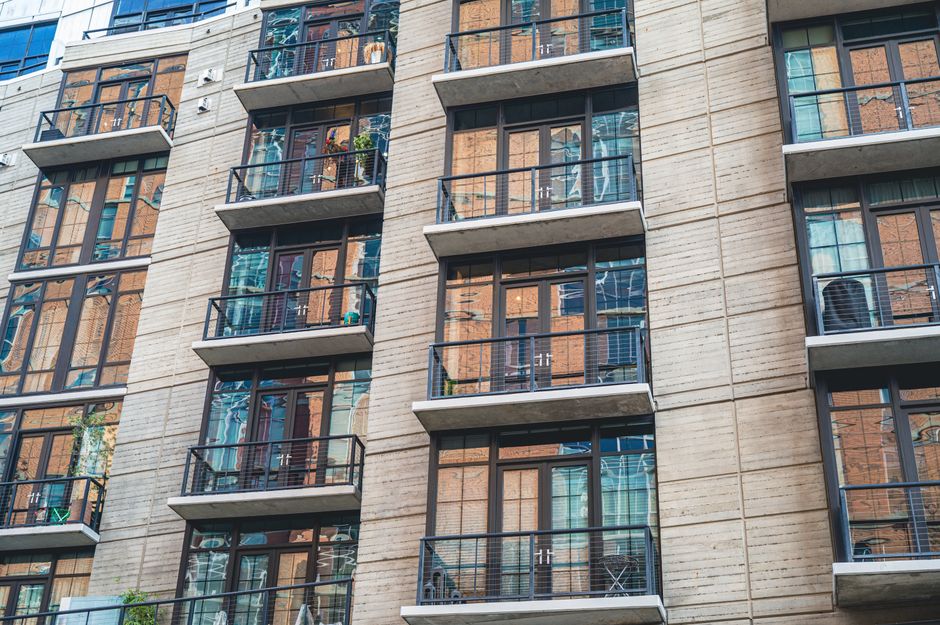
The physical boundary of a balcony is the railing. The practical boundary is much larger. Whatever you release into the air (noise, smoke, cooking smell, water, cigarette ash) leaves your square footage almost immediately and lands on someone else’s.
This is the single idea that resolves most balcony questions. You are not managing your own space. You are managing the air between your balcony and three or four others: the units beside you, above you, below you, and often the patios or windows across a courtyard. Picture that shared column of air instead of a private box, and the etiquette answers itself.
Sound Carries Farther Than You Think
Outdoor sound behaves differently from sound inside your unit. There is no carpet, no furniture, and no closed door to absorb it. A normal speaking voice on a balcony is clearly audible several units away, and it bounces off opposite walls in a courtyard, which is why enclosed courtyards feel so live.
The habits are simple. Take phone calls off speaker when you are outside. Keep music low enough that it stays roughly within your own railing, and assume bass travels even when the melody does not. After dark, drop your voice a register: what feels like a normal chat at 10 p.m. can be the loudest thing in a quiet courtyard. Most leases set formal quiet hours, commonly running from around 10 or 11 p.m. to 7 or 8 a.m., and a balcony is exactly where those hours are easiest to forget and hardest to hide. If you host even a small group outside, move indoors as the night runs late rather than trusting that everyone is being quiet.
Smoke Is the Hardest Balcony Problem
Smoke generates the most complaints and the most lasting resentment, because it is involuntary on the receiving end. A neighbor can close their own window and still get cigarette, cigar, or cannabis smoke pulled in through a screen or a vent. Unlike noise, it lingers and clings to fabric in a way people find genuinely upsetting.
Whether smoking is even allowed on your balcony depends entirely on your lease and local rules, which vary widely. Many buildings now have smoke-free policies covering balconies and all outdoor areas, and some cities restrict smoking near shared multi-unit spaces. Check your lease before you assume a balcony is a designated smoking spot, because in a growing number of buildings it is not.
If smoking is permitted and you do it, a few things reduce the friction: smoke when your immediate neighbors are least likely to be outside, keep a proper closed container for butts rather than a cup or the railing, and never flick anything over the edge. A dropped cigarette is both a fire risk and a neighbor-relations disaster. Cooking odors follow similar physics, and the way smells travel between units surprises most people who have only lived in houses.
Grilling: Check Before You Light It
Grilling on a balcony is rarely a matter of preference. Many fire codes restrict or ban open-flame and charcoal grills on combustible balconies, and a large share of leases prohibit them regardless of local code. The rules genuinely vary by jurisdiction and building, so the only reliable move is to read your lease and check your local fire regulations before buying a grill.
Even where grilling is allowed, the details matter. Electric grills are frequently permitted where charcoal and propane are not, and clearance from the wall and railing is often specified. If you do grill, treat smoke drift the way you treat cigarette smoke: watch which way it is blowing, and do not smoke out the neighbor above you during dinner.
Sightlines and the Privacy Question
Balconies create sightlines that indoor living never does. Depending on the building’s geometry, you may be able to see directly into a neighbor’s balcony or window, and they into yours.
Do not stare into adjacent balconies or treat a neighbor’s outdoor space as scenery to comment on. If you use an outdoor camera or video doorbell that could capture a neighbor’s balcony or windows, angle it toward your own door rather than theirs. People are far more sensitive about being recorded at home than about being briefly seen, and a camera pointed at someone’s living space is one of the fastest ways to turn a neutral neighbor into a hostile one. Screens, outdoor curtains, and tall planters are all legitimate ways to add privacy to your own balcony, as long as they stay within your building’s rules on railing changes and exterior appearance.
Plants, Drips, and What Falls Down
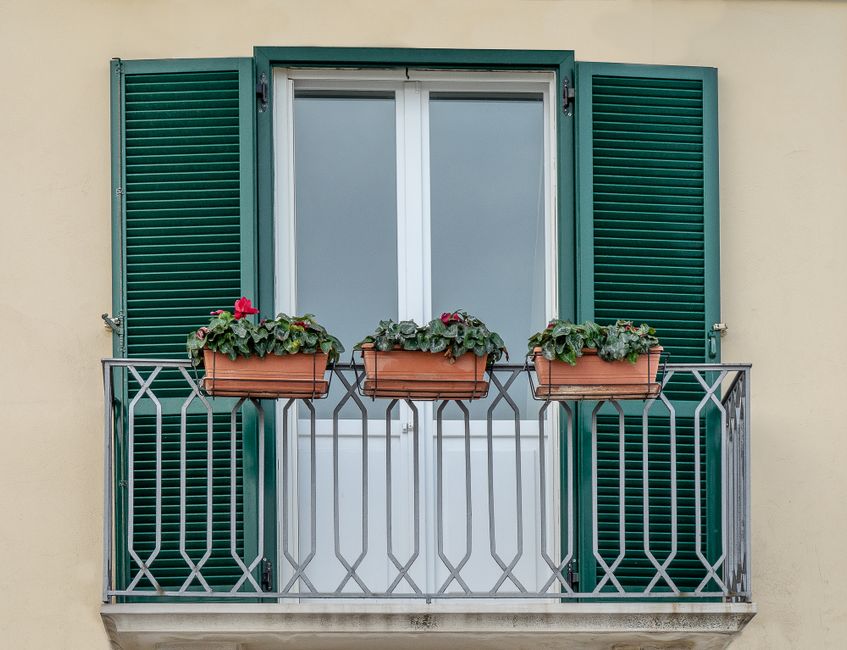
Plants are one of the best uses of a balcony and one of the most common sources of small complaints. The problem is almost always water. When you water plants on a railing or an upper balcony, the runoff drips onto the balcony, furniture, or laundry below, and an unexplained cold drip from above is both annoying and slightly mysterious to the neighbor it lands on.
The fix is to use pots with saucers or self-watering containers, water slowly, and keep railing planters on the inside of the railing rather than hanging them over the edge. Anything mounted on the outside of a railing can fall, and a falling pot from an upper floor is a serious safety hazard, not just a mess. String lights, decorations, and lightweight furniture should all be secured so wind cannot lift them over. Sweeping causes the same problem: dust or soil swept off your edge lands on the balcony below, so sweep into a dustpan and bin it instead.
What You Hang, Store, and Drape
Balconies tempt people to use them as storage, and buildings usually have opinions about this. Many leases restrict what is visible from outside, prohibit drying laundry over the railing, and forbid open piles that turn the balcony into an overflow closet. Reasonable defaults: keep the floor mostly clear, store items in weatherproof containers, and keep anything tall or loose away from the railing edge. If you dry laundry outside, use a low rack that sits inside the railing rather than draping clothes over it.
When a Neighbor’s Balcony Bothers You
If a neighbor’s balcony habit is affecting you (the smoke, the noise, the drips), the same approach works that works for any shared-space friction: assume thoughtlessness rather than malice, and start small and direct. Most people genuinely do not realize how far their smoke or their voice travels, because they cannot experience their own balcony from the outside.
A brief, friendly, in-person mention usually resolves it. Something like, “I have noticed cigarette smoke coming into my window in the evenings, would you mind not smoking on that side,” is far more effective than a passive-aggressive note or an immediate complaint to management. If a calm first conversation is genuinely hard to start, it helps to plan the first knock before you make it, so you lead with the specific issue rather than an accusation. Keep that first ask about the behavior and its effect, not about the person.
Kids, Pets, and the Railing
Balconies carry real safety obligations, especially with small children and pets. Railings are designed to stop adults from falling, not to contain a determined toddler or a cat. Do not place furniture, planters, or boxes near the railing where a child could climb up and over, and never leave a young child alone on a balcony. Some pets will jump or slip through railings, and a barking dog left outside becomes a shared-space noise problem quickly. These are safety points rather than etiquette ones, but balcony falls are among the most preventable serious accidents in apartment living.
When to Bring in Management
Most balcony issues never need management. The ones that do usually involve rules or safety rather than taste: repeated smoking in a smoke-free building, a grill that violates fire code, objects that could fall on someone, or a neighbor who responds to a polite request with hostility. In those cases, document what is happening with dates and photos, and raise it factually rather than emotionally. Because balcony rules vary by lease, building, and local law, management is also the right place to confirm what is permitted before you assume a neighbor is breaking a rule. Sometimes the habit is allowed, and the real answer is a privacy screen or a closed window on your side.
The Small Courtesies That Keep the Peace
Almost all of balcony etiquette compresses into a short list:
- Assume everything you release into the air lands on a neighbor.
- Keep voices and music low after dark, and move groups indoors as the night runs late.
- Check your lease and local rules before smoking or grilling, because both vary widely.
- Never drop, flick, or sweep anything over the edge.
- Water plants gently, keep pots inside the railing, and secure anything the wind could lift.
- Point cameras at your own space, not your neighbor’s.
- Raise problems in person, early, and about the behavior rather than the person.
A balcony is one of the genuine pleasures of apartment living, a small piece of outdoor space that is yours to use. It stays a pleasure, for you and for everyone around you, when you treat it as the shared stage it actually is. Like a shared patio on a summer evening, it works best when everyone quietly assumes the space is a little more public than it feels.
Frequently asked
Can I smoke on my apartment balcony?
It depends entirely on your lease and local rules, which vary widely. Many buildings now ban smoking on balconies and in all outdoor areas, and some cities restrict it near shared spaces. Check your lease before assuming your balcony is a smoking spot.
Is grilling allowed on an apartment balcony?
Often not. Many fire codes restrict or ban charcoal and open-flame grills on combustible balconies, and many leases prohibit them regardless of code. Electric grills are sometimes permitted where others are not. Read your lease and check local fire regulations before buying one.
What can I do about a neighbor's balcony smoke drifting into my unit?
Start with a brief, friendly, in-person request that names the problem and its effect rather than the person. Most people do not realize their smoke travels. If that fails, document dates and raise it with management, especially in a smoke-free building.
Do quiet hours apply to balconies?
Yes. Most leases set quiet hours, often around 10 or 11 p.m. to 7 or 8 a.m., and they apply outdoors too. Sound carries much farther on a balcony than indoors, so voices and music that feel normal can dominate a quiet courtyard.
How do I stop balcony plant water from dripping on the neighbor below?
Use pots with saucers or self-watering containers, water slowly, and keep planters on the inside of the railing rather than hanging them over the edge. This also prevents a pot from falling, which is a serious hazard from an upper floor.
Related guides
 Shared Spaces
Rooftops, Sunsets, and Other Shared Pleasures
A shared rooftop is one of the great apartment amenities. A grounded guide to using it well without creating tension…
 Shared Spaces
The Courtyard Bench Problem
A small bench in a shared courtyard tests building etiquette more than most amenities. A grounded guide to using one…
 Shared Spaces
The Building’s Grill: Hosting Without Annoying Anyone
A shared building grill is one of the better community amenities when used well. A grounded guide to using it…