Walking Home Late: Honest, Non-Paranoid Habits
Walking home at night should not be a paranoid experience. The habits that make it safer are quieter and more effective than the dramatic ones people imagine.


Walking home late is not a crisis. It is normal urban life. The habits that actually make it safer are quieter, smaller, and more sustainable than the dramatic ones most people adopt in their first year. Here is what actually works, distilled from years of city walks and conversations with people who do this well.
The principle behind it all
The single most important principle is this: most danger comes from looking like a target, not from the situation itself. Looking like a target is a function of behavior, not appearance. A person who walks with awareness and intent is much less likely to be targeted than a person who looks lost, distracted, or anxious.
This is not about projecting toughness. It is about not projecting vulnerability. The most common indicators of vulnerability that opportunistic incidents key on are: walking while looking at a phone for extended stretches, wearing headphones in both ears with no awareness, looking lost or confused, weaving or appearing impaired, isolation from any other people.
Reducing these signals does more for safety than any single tool or technique. The person walking with their head up, at a steady pace, with one ear free, is rarely an opportunistic target. Reference: the National Crime Prevention Council’s personal safety guidance.
The phone-and-headphone question
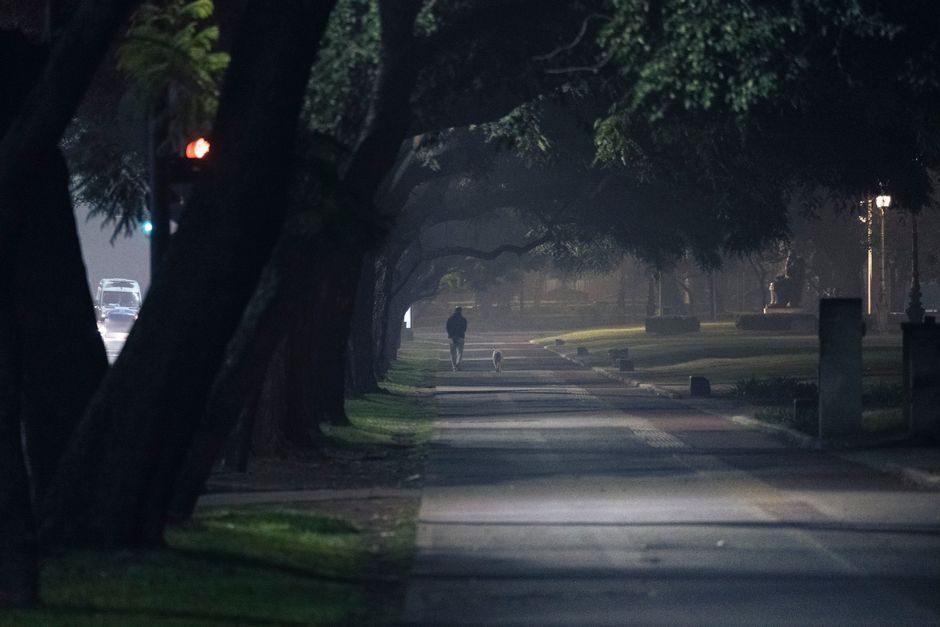
The biggest single change you can make is how you use your phone and headphones at night. Walking with both headphones in, eyes on a screen, is the textbook vulnerable profile. You cannot hear what is around you. You cannot see ahead. You are absorbed in something else.
The simple adjustment is one ear out and the phone in your pocket for the actual walk. You can listen to your podcast or music. You can call a friend. You can do all of it with one ear and your phone out of sight. The other ear and your eyes are available to your environment.
If you must look at the phone (checking the route, sending a quick message), step aside, stop walking, do the task, then resume. The pause is brief. The vulnerability of walking while focused on a screen is much higher than the inconvenience of stopping.
If you feel that someone is following you, take an unexpected turn. Cross the street. Stop at a closed shop window and look at your phone for fifteen seconds. If they continue past, your concern was unfounded. If they also turn or stop, your concern was real and you have just confirmed it without confrontation.
The route question
Most people develop a default route from common destinations to home. The route matters. The well-lit, slightly longer route is almost always better than the dim, slightly shorter shortcut. The route with more pedestrian traffic is better than the deserted one, even if the deserted one is faster.
This becomes second nature after a few weeks. The instinct to take the small alley to save three minutes fades when you realize the main street is two minutes longer and consistently feels safer.
Avoid the pattern of routes that have you walking down empty stretches for more than a block. If your route includes an empty park or an industrial zone for a meaningful stretch, find a different route, even if it adds time.
The check-in habit
Telling someone where you are and when you expect to arrive is a low-cost safety upgrade. Many smartphones have built-in features for this (Find My on iPhone, Location Sharing on Android). A trusted person can see your real-time location and your estimated arrival.
You do not need to use this every night. For longer walks, late nights, unfamiliar areas, or situations where you feel slightly unsure, sharing your location with someone is a useful background layer. If something goes wrong, they have a starting point. If nothing goes wrong, they never notice.
Avoid the over-elaborate version of this where you text someone every ten minutes. Either share your location, or send one message at the start and one at arrival. The lighter touch is more sustainable.
The walking pace
Walking pace matters. Too slow looks lost or impaired. Too fast looks panicked. The right pace is steady, purposeful, slightly faster than a casual stroll. You should look like a person who knows where they are going and has somewhere to be.
If you find yourself walking too fast because you are nervous, slow down slightly. The slowing actually projects confidence. If you find yourself walking too slow because you are not paying attention, pick up the pace. Either adjustment moves you closer to the steady purposeful profile that opportunistic incidents tend to skip.
The crossing-the-street question
If you see someone ahead who looks unusual or who you would rather not pass, crossing the street is a perfectly normal urban behavior. It does not need to be a dramatic gesture. Step off the curb at the next crossing, walk to the other side, and continue your route on that side.
The other person may not even notice. If they do, the action is normal enough that it does not communicate accusation. You have created distance without escalation.
Do not do this with everyone you encounter. The mass crossing of the street to avoid every stranger reads as overtly defensive and exhausts you. Reserve the crossing for the specific situations where your instinct flags something. Trust the instinct without overusing it.
The defensive-tool question
Pepper spray, personal alarms, knives, and similar items are popular as defensive tools. Honestly, most of them are less useful than expected and some are actively harmful.
Pepper spray is sometimes useful in the rare physical situation but is often deployed incorrectly (against the wind, into your own face) and requires practice. Personal alarms are loud but often ignored. Knives carried defensively are more likely to be used against the carrier in an actual altercation than to provide protection.
The defensive tool that has the highest realistic value is a charged phone and a known route. The next most useful is a steady awareness of your environment. Beyond that, most physical tools are a small marginal benefit that comes with their own risks.
If you do carry pepper spray or an alarm, know how to use it. Practice the deployment in a safe context. Carry it where you can access it without fumbling. Untrained or inaccessible tools are not helpful in actual moments.
The “what if” planning
A modest amount of “what if” thinking helps. What if a car pulls up alongside you? What if someone asks for directions in an unusual way? What if you notice you are being followed? Thinking through these situations briefly, in advance, lets your response come from preparation rather than panic.
The basic responses are simple. For a car that pulls up, walk briskly in the opposite direction of the car (the car cannot easily reverse to follow). For a suspicious request, do not stop. Keep moving while answering briefly or saying you do not know. For following concerns, the reverse-route technique described above.
Do not overthink. Most “what ifs” never happen. The brief planning is preparation, not anxiety.
The arrival
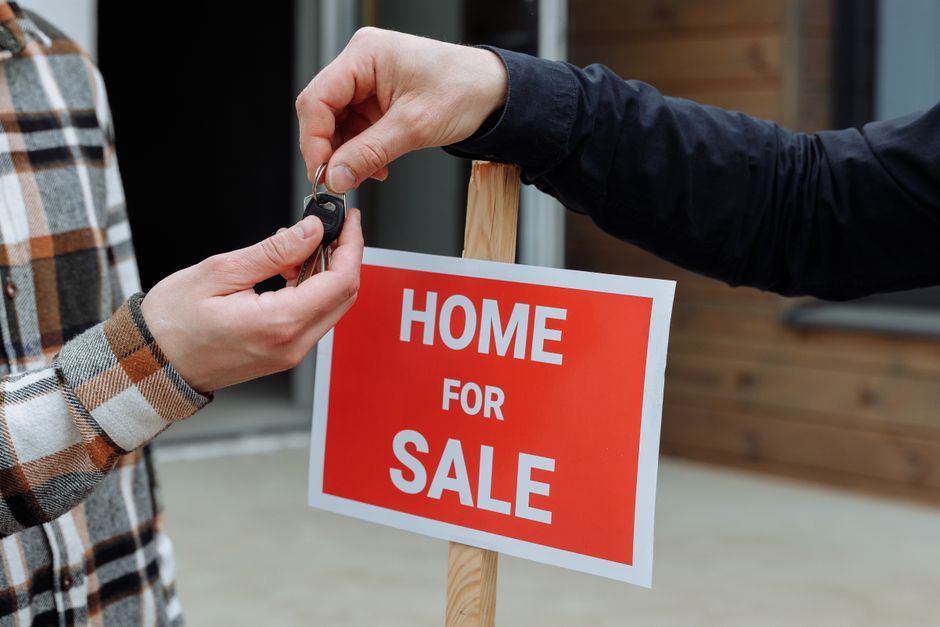
The most vulnerable moment of a late-night walk is often the arrival, when you are reaching for keys at the front door. Have your keys in your hand before you reach the building. Do not stand outside the door fumbling with a bag. Move quickly through the entry. Lock the door behind you.
If your building has a vestibule (a small inner entry), use it. Step inside, close the outer door, then unlock the inner door. The vestibule provides a brief secured space between the street and your home.
A quick pre-walk checklist
- Charge your phone to at least fifty percent before leaving, or slip a small backup battery into your bag.
- Decide the route in advance and share your live location with one trusted contact for the length of the walk.
- Pocket the phone once you actually start walking, keep one ear free, and leave one hand unencumbered.
- Move your keys to an outer pocket so you can reach the door without setting anything down or fumbling.
- Note the location of open businesses along your route in case you need a lit, occupied place to duck into.
- Skip the shortcut through the alley or empty lot and take the lit, populated street even if it adds a few minutes.
- Save the local non-emergency police line and a car service number as favorites for one-tap access.
- Trust the reverse-route signal if you feel followed: turn, cross the street, or pause to confirm the pattern before reacting.
What to skip
Many internet safety guides recommend things that are not actually useful. Walking with keys between your knuckles. Pretending to be on a phone call. Yelling specific phrases. Most of these are theatrical and have minimal effect in actual incidents.
The boring habits are the effective ones. Steady pace. One ear free. Phone in pocket. Known route. Awareness of your environment. Confidence without aggression. These are not dramatic. They are not interesting to read about. They work.
The longer you live in a city, the more these habits become unconscious. You walk home at midnight without thinking about safety because the safety is built into how you move. The walk becomes ordinary. The city becomes home. That is the actual goal of all of this. Not constant vigilance. Steady confidence, earned slowly, that lets you live your life without fear governing your evenings.
Frequently asked
Is it safer to walk in pairs at night?
Generally yes, especially in unfamiliar areas or late hours. But a confident solo walker is much safer than a distracted pair. The behavior matters more than the number.
Should I use a rideshare instead of walking?
Sometimes, for longer distances or for routes that are genuinely sketchy. Walking shorter routes in your own neighborhood is usually fine with the basic habits in place.
What should I do if I am actually followed?
Cross the street, change direction, head to a populated area, and if the following continues, call for help. A 24-hour business is often the best immediate destination.
Is it safer to take main roads or quieter streets?
Main roads with foot traffic are usually safer than quieter streets, even if they are longer. Light and presence of other people are stronger safety factors than distance.
Related guides
 Community Safety
Reading Your Building: A Calm Way to Notice Patterns
Noticing patterns in your apartment building is a quiet skill that improves your safety and your sense of belonging. A…
 Community Safety
Kids, Lobbies, and the Conversations to Have Early
Children in apartment lobbies and shared spaces is a quieter social question than it sounds. A grounded guide for parents…
 Community Safety
Managing Mail and Packages When You Travel for a Week
A mailbox that overflows for a week is one of the clearest signals that nobody is home. Letters wedged in…