When You See Something That Feels Off: A Pause Before the 911 Call
A 911 call is the right move for a real emergency. For ambiguous situations, a brief pause helps you make the call that actually fits what you saw.


A 911 call is the right move for a real emergency. It is the wrong move for many ambiguous situations that would be better handled differently. The pause between noticing something and acting is one of the most important small skills in community safety, because the call has consequences for the people you might call about and for the people who actually need the resources you would be using. Reference: the FCC’s consumer guide on when to use 911.
When to call without pausing
Some situations are clear. If you see them, call. The pause does not apply:
- An active fire.
- An active physical assault or fight.
- Someone with a weapon being used or threatened.
- A medical emergency (someone unconscious, having a seizure, severe injury).
- A car accident with possible injury.
- An active break-in or robbery in progress.
- An immediate threat to a child.
For these situations, the pause costs lives. Call. Be specific about what you are seeing. Stay on the line.

When the pause is useful
For everything else, a brief pause helps. The pause is not about hesitation. It is about gathering enough information to make a call that actually matches the situation.
Situations where the pause helps:
- An ambiguous sound you cannot identify.
- An unfamiliar person who is behaving oddly but not threateningly.
- A car you do not recognize parked unusually.
- A vague feeling that something is wrong without a clear trigger.
- A loud argument that might or might not be physical.
- A person who looks impaired but is not in immediate danger.
- A possible mental health crisis where no one is in physical danger.
For these, the pause helps you observe a few seconds more, listen for clarification, and decide whether 911 is the right channel or whether a different channel (building staff, non-emergency line, mental health crisis line) would serve better.
What the pause looks like
The pause is short. Ten to thirty seconds is usually plenty. During the pause:
- Listen or observe more carefully without acting.
- Consider whether what you are seeing matches a known pattern (a real emergency vs. something that resembles one).
- Notice your own emotional state. Are you reacting to actual danger, or to general anxiety?
- Consider alternatives. Is there a more appropriate channel? Building staff? Non-emergency line?
- If you are still uncertain after the pause, the call is appropriate. Uncertainty about a possibly serious situation is itself a reason to involve professionals.
The pause is not about second-guessing yourself out of a needed call. If your instinct after the pause is still “this needs help,” call. The pause is for situations where the instinct turns out to be a misread.
Most jurisdictions have a non-emergency police line. It connects you to the same dispatch system but flags your call as lower priority. For situations that need a response but are not active emergencies, this is the right channel. It does not tie up emergency resources and it gets the right response for the actual situation.
The consequences of getting it wrong
Calling 911 for non-emergencies has real costs. The dispatcher spends time on your call that they would have spent on someone in actual emergency. The responding units are pulled away from active situations. The subject of the call (often a person who is not actually doing anything wrong) experiences an emergency response that may have consequences for them socially, legally, or psychologically.
The most serious consequence applies in situations involving people who are simply different (mental health crises, homelessness, people of different races than the caller, neurodivergent individuals). Studies and recent events have shown that emergency responses to non-emergency situations involving these groups can escalate badly. The caller’s intent to help can produce outcomes opposite to the intent.
This is not a reason to avoid calling. It is a reason to make sure the call matches the situation. For genuine emergencies, the right response is help. For ambiguous situations, the right response is often different.
The alternatives to 911
For situations that do not require immediate emergency response, several alternatives often serve better:
- Non-emergency police line. For situations that need a police response but are not active emergencies. Suspicious activity that is not currently happening, minor disturbances, follow-up reports.
- Building management or doorperson. For situations inside the building that may be a tenant matter rather than a police matter.
- Mental health crisis line. Many cities now have dedicated mental health response teams that can be dispatched instead of police for crisis situations involving mental health rather than crime.
- Animal control. For pet or wildlife situations.
- Utility company emergency lines. For gas leaks, downed power lines, water main breaks.
- Domestic violence hotlines. For situations where you suspect domestic abuse and want trained third-party guidance before involving emergency services directly.
Knowing these channels in advance makes the right-channel decision much easier in the moment.
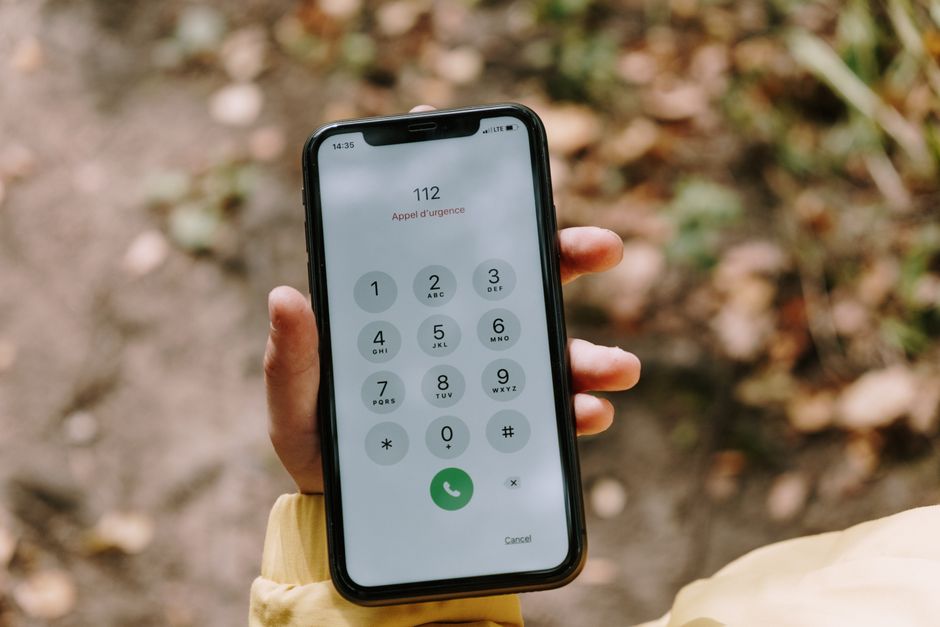
What to say if you do call 911
If you call, the dispatcher needs specific information to send the right response. Be clear about:
- Your location (address, unit number, floor).
- What you are seeing or hearing.
- Whether anyone appears injured.
- Whether weapons are involved.
- How many people are involved.
- Whether you are in a safe location yourself.
The dispatcher will ask follow-up questions. Stay on the line as long as they want. Do not hang up unless directed to. Provide updates if the situation changes while you are on the call.
Avoid speculation. Stick to what you have directly observed. “I heard yelling and what sounded like a slap” is more useful than “I think there is domestic violence happening.” The dispatcher will assess based on what you describe.
The follow-up question
After a call, you will sometimes wonder whether you did the right thing. The right answer is usually yes, even when the situation turned out to be less serious than you thought. A call made in good faith based on what you observed is a reasonable action. The dispatcher’s job is to assess and route. Your job is to provide accurate information about what you saw.
The exception is when the call was clearly disproportionate to the situation. Calling 911 because someone parked in your spot, or because a neighbor is having a loud (but not violent) argument, or because someone looks different than the people you are used to seeing in your neighborhood, is not a good-faith call. These are non-emergencies and they have other channels.
If you find that you made a call that did not match the situation, the response is to reflect, learn, and recalibrate. The dispatchers and responders do not blame callers for honest mistakes. They do hope callers learn from the experience and make better calls in the future.
The community safety perspective
Community safety is built on residents who know when to call for help and when to handle things differently. A community that calls 911 for everything erodes the system. A community that never calls for genuine emergencies fails its members. The middle path is the one where calls are reserved for situations that match them, and other channels are used for situations that need a different response.
The pause is what makes this possible. The pause is not delay. It is the small skill of matching the response to the situation. Communities that develop this skill, collectively, are safer in real ways. Communities that do not become caricatures of fear or chaos. The choice happens one call at a time, with one brief pause at a time.
Frequently asked
Is it ever wrong to call 911?
Yes, for non-emergency situations where another channel would serve better. The system is designed for emergencies. Using it for non-emergencies reduces capacity for real ones.
How do I know my city's non-emergency police line?
Search "[city name] non-emergency police line." Most cities publish this prominently. Save the number in your phone for quick access.
What if I am unsure whether something is an emergency?
When in genuine doubt about possible serious harm, call. Dispatchers can assess and downgrade or upgrade as appropriate. The pause helps with situations where the answer is clearer than you initially thought.
Can I call 911 anonymously?
In most jurisdictions, your phone number is logged when you call. You can request anonymity in your follow-up information, but the initial call is generally not anonymous. For situations where anonymity matters, tip lines and other channels may be more appropriate.
Related guides
 Community Safety
Walking Home Late: Honest, Non-Paranoid Habits
Walking home late is normal city life and rarely as dangerous as fear suggests. A grounded look at the habits…
 Community Safety
Fire Safety in a High Rise, Without the Panic
Fire safety in a high-rise building is more boring than dramatic. A calm look at the realistic habits and plans…
 Community Safety
Package Theft Without Going to War
Package theft is real but rarely worth the cameras, signs, and confrontations residents reach for. A grounded look at calmer…