Cooling a Top-Floor Apartment Without Central Air
A top-floor apartment comes with real advantages. No footsteps overhead, better light, often a quieter unit and a better view. It also comes with heat. On a hot day, the top floor is usually the warmest…

A top-floor apartment comes with real advantages. No footsteps overhead, better light, often a quieter unit and a better view. It also comes with heat. On a hot day, the top floor is usually the warmest unit in the building, and without central air, the difference is something you feel from late afternoon well into the night. The good news is that most of that heat is manageable with a handful of cheap, honest tactics, and the ones that work best are not always the ones people reach for first.
Why the Top Floor Runs Hotter
Two things are happening at once. First, warm air rises, so heat generated throughout the building tends to collect on the upper floors. Second, and usually the bigger factor, the roof sits in direct sun all day, absorbing that heat and radiating it down through the ceiling into your unit for hours after the sun goes down. That is why a top-floor apartment can still feel hot at 10 p.m. when the outdoor air has already started to cool.
Direction matters too. West-facing windows take the full force of the afternoon sun, the hottest part of the day, while south-facing windows get sun for the longest stretch. If your warmest rooms face those directions, that tells you where to focus.
Block the Sun Before It Becomes Heat
The single most effective thing you can do costs almost nothing: stop sunlight from entering in the first place. Once light passes through glass and lands on your floor and furniture, it becomes heat trapped inside the room. Blocking it at the window is far more effective than cooling the room down afterward.
Practical options, from cheapest up:
- Close curtains or blinds on any sunny window during the day. Light-colored or white-backed curtains reflect more sun than dark ones.
- Cellular or honeycomb shades trap a layer of air and insulate the window better than flat blinds.
- Reflective or tinted window film sticks to the glass and cuts a large share of solar heat. Check your lease before applying anything permanent, since many films can be removed cleanly later.
- Blackout curtains on a west-facing bedroom window make the biggest single difference in most top-floor units.
The rule: shade the sunny side while the sun is on it, then open back up once it has moved off.
The Night-Flush Routine: Timing Your Windows
An apartment without air conditioning is a container you fill with whichever air is cooler, and the whole trick is timing.
At night and early in the morning, when the outdoor air drops below your indoor temperature, open the windows and let the apartment flush out the heat it stored during the day. Before the outside air climbs back up, usually by mid-morning, close the windows and pull the coverings shut, trapping the cool night air and locking the hot day air out.
A cheap indoor-outdoor thermometer takes the guesswork out of it: when outside is cooler, open up; when outside is warmer, close down. Done consistently, it can keep a top-floor unit several degrees cooler through the worst of the afternoon.
Fans Cool People, Not Rooms
Fans are the most misunderstood cooling tool. A fan does not lower the temperature of the air. It cools you by moving air across your skin and helping sweat evaporate, which changes how hot you feel but does nothing for an empty room. Turn fans off when you leave, both to save power and because the motor adds a little heat of its own.
A few ways to get more out of them:
- A box fan set in an open window at night, facing outward, pushes hot air out. Open a window in another room to pull cooler air in behind it.
- Two windows on opposite sides of the apartment create a cross-breeze. A fan placed to reinforce that path moves a surprising amount of air.
- If you have a ceiling fan, most have a small switch that reverses the blades. In summer you want them pushing air straight down, which usually means spinning counterclockwise as you look up.
Window Unit or Portable: Choosing an Air Conditioner
When shading, timing, and fans are not enough, and during a heat wave they often are not, an air conditioner is the honest answer. You have two common choices.
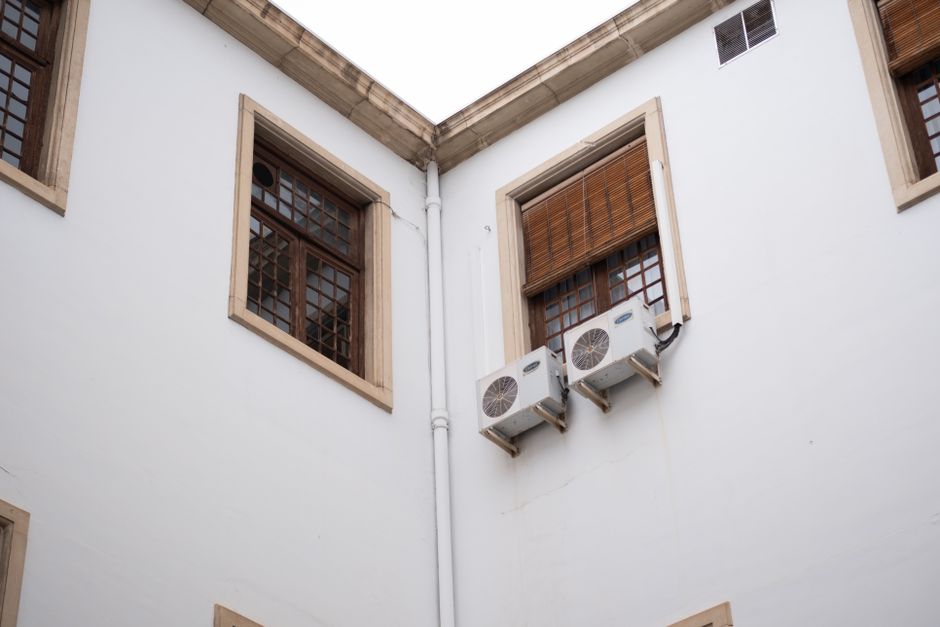
A window unit sits in the frame and vents its heat directly outside. These are generally more efficient and cheaper to run than portables of the same capacity, and they keep your floor free. The tradeoffs: they block a window, they are heavy, and they need secure installation.
A portable unit stands on the floor and pushes its heat outside through a flexible hose that runs to a window kit. It is easier to set up and does not hang out of the window, which matters if your building bans window units. The downsides are real: portables are usually less efficient, louder, and take up floor space.
For either type, size the unit to the room rather than buying the biggest one you can find. An oversized air conditioner cools quickly but shuts off before removing much humidity, leaving the room cold and clammy. Its capacity, rated in BTUs, should roughly match the square footage you are cooling.
Installing a Window Unit Safely and Within the Lease
Before you buy a window unit, read your lease and check the building rules. Some buildings prohibit window units outright, some require mounting brackets, and some restrict which windows can be used. This is worth finding before you spend the money, not after.
Safety is not optional here. A window air conditioner is heavy, and a top-floor unit falling onto the sidewalk or a balcony below is a genuine danger. Support it with proper brackets rated for its weight rather than the window sash alone. Follow the manufacturer’s instructions, including the slight outward tilt that lets condensation drain outside, and make sure that drip does not land on the unit below you.
Plug the air conditioner directly into a wall outlet. AC units draw a lot of current, and running one through a thin extension cord or an overloaded power strip is a real fire risk.
Lower the Heat You Make Yourself
Some of the heat in a top-floor apartment is heat you generate indoors, and on a hot day it is worth noticing where it comes from.
The oven and stovetop are the biggest offenders, dumping heat into the apartment during the hottest part of the day. Shift heavy cooking to the morning, lean on the microwave, cold meals, or a grill if the building has one, and save the oven for cooler days. The clothes dryer is similar: run it at night, or hang laundry to dry instead.
Older incandescent bulbs give off most of their energy as heat, so swapping them for cooler-running LEDs quietly lowers the temperature of any room you keep lit. Turn off electronics you are not using, and close the doors to rooms you are not in so you are only cooling the space you actually occupy. It is a small version of a larger truth: light and heat shape how an apartment feels day to day.
Humidity Is Half the Discomfort
Temperature is only half of why a room feels unbearable. Humidity is the other half. When the air is damp, sweat cannot evaporate off your skin, so a humid 80 degrees feels far worse than a dry 80 degrees. Pulling moisture from the air can make a room feel noticeably more comfortable even when the thermometer does not move.
Running the bathroom fan during and after showers, and the kitchen fan while cooking, removes a lot of moisture right at the source. In a genuinely muggy climate, a small dehumidifier helps, though it adds a little heat of its own, so it is a tradeoff. One note of caution: evaporative or swamp coolers, which cool by adding moisture, only work in dry climates. In a humid one they make things worse.
When the Building Is the Real Problem
Sometimes a top-floor apartment is hot because of the building itself: a roof with little or no insulation, an unventilated attic space above the ceiling, or old single-pane windows that let heat pour in. Those are structural issues, and they belong to the landlord rather than to you.
If you suspect the building is the problem, a well-written repair request tends to get a better response than a frustrated one. Ask about roof or attic insulation, weatherstripping, or repairing windows that no longer seal. These are ordinary maintenance items, not special favors.
Be aware of what the law does and does not require, because it varies widely by location. In many places, landlords must provide heat in winter but not cooling in summer, though a growing number of cities have begun adding maximum indoor temperature or cooling rules. Whether your landlord owes you any cooling, and what counts as a habitability problem, depends on where you live and what your lease says. Check your local tenant laws and your lease rather than assuming either way.
Getting Through a Heat Wave Safely
During a real heat wave, cooling a top-floor apartment stops being about comfort and becomes about health. Heat is genuinely dangerous, especially for older adults, young children, people with certain medical conditions, and pets.
Stay ahead of it. Drink water before you feel thirsty, take cool showers, and keep a damp cloth on the back of your neck. Because heat rises even within your own apartment, sleeping in the lowest, most ventilated room helps. During the hottest hours, there is no shame in leaving: a library or a public cooling center is a legitimate way to wait out the peak.
Learn the warning signs. Heavy sweating, dizziness, headache, nausea, and weakness can signal heat exhaustion, which calls for getting somewhere cool, resting, and rehydrating. Confusion, a very high body temperature, or skin that has stopped sweating signal heat stroke, a medical emergency: call for help immediately. And take a minute to check on elderly neighbors when it is this hot. It is one of the quiet things that knowing the people around you makes possible.
Frequently asked
Does my landlord have to provide air conditioning?
In most places, no. Landlords are usually required to provide heat in winter but not cooling in summer. A growing number of cities are adding maximum-temperature or cooling rules, so check your local tenant laws and your lease, since requirements vary widely by location.
Is a window AC or a portable AC better for a top-floor apartment?
A window unit is usually more efficient, cheaper to run, and keeps your floor clear, but it hangs out the window and needs secure mounting. A portable is easier to install and works where window units are banned, though it is louder and less efficient.
Why is my top-floor apartment still hot at night?
The roof absorbs sun all day and keeps radiating that heat down through your ceiling for hours after sunset, so the unit stays warm even once outdoor air has cooled. Open the windows once the outside air drops, and keep the sunny rooms shaded by day.
Do fans actually cool a room?
No. A fan does not lower air temperature; it cools you by moving air across your skin so sweat evaporates. That helps a lot when you are in the room, but a fan running in an empty room does nothing, so turn it off when you leave.
Can I put reflective film on my windows as a renter?
Often yes, but check your lease first, since some landlords restrict permanent changes. Many films peel off cleanly at move-out. If you would rather not risk it, light-colored blackout curtains block most of the same heat without touching the glass.
Related guides
 Apartment Living
The Realistic Way to Compost in a Small Unit
Composting in an apartment is realistic, clean, and surprisingly low-effort with the right system. A grounded look at the options…
 Apartment Living
Storage in Six Hundred Square Feet, Without the Hacks
Real apartment storage in a small unit is more about culling than clever furniture. A grounded look at what works…
 Apartment Living
The Quiet Joys of a Small Unit, Honestly
A small apartment is usually framed as a compromise. After enough time in one, it starts to look like a…