The Front Door Habit: Locking Patterns That Quietly Make You Safer
The front door is the most important security feature of any apartment. The habits around it are simpler than most security guides admit.


Most home entries into apartments are not dramatic. They do not involve crowbars or window glass. They involve doors that were left unlocked because the resident was only going out for a moment, or because the door looked locked from inside but did not engage from outside, or because a simple deadbolt was never used. The most effective security upgrade for almost any apartment is not a new lock. It is a more consistent habit with the locks you already have.
The deadbolt is the lock that matters
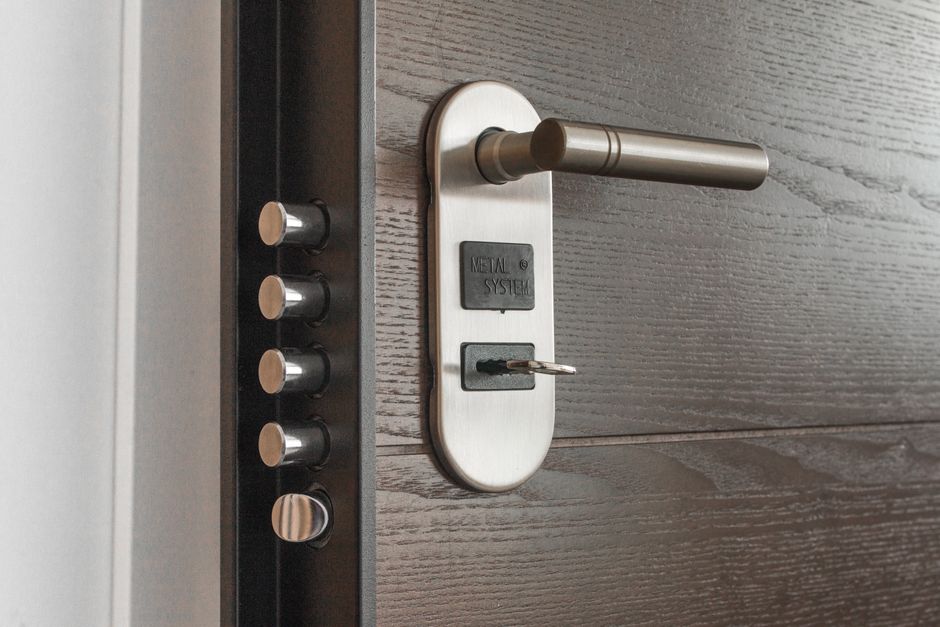
Most apartment doors have two locks. The doorknob lock (the one your key turns when you twist the handle) and the deadbolt (the separate lock above or below the handle). The doorknob lock is easier to defeat. The deadbolt is much harder.
The doorknob lock can often be opened with a credit card, a thin piece of plastic, or in some cases a sharp jerk on the handle. The deadbolt, properly installed, cannot be opened this way. A determined intruder can defeat any lock with enough time and noise. The deadbolt makes the time and noise significant enough that most opportunistic entries do not happen.
The habit is simple. Use the deadbolt every time, even for short trips out, even when you are home. The doorknob lock is not the security. The deadbolt is.
The five-second test
From inside your apartment, check whether your door is actually locked by pulling on it. Pull firmly. If the door moves at all, the deadbolt is not engaged. If the door is solid and does not budge, you are locked in.
This five-second test catches the most common security failure in apartments: the assumption that a door is locked when it is not. The deadbolt sometimes does not engage fully if the door is not perfectly aligned with the strike plate. The doorknob lock sometimes does not click into place. The chain sometimes hangs loose without you noticing.
Doing the pull test every time you lock the door, especially at night, becomes automatic within a week. It catches almost every “I thought I locked it” failure.
The chain on most apartment doors is not a real security feature. It is decorative. A firm push will break it. Use the chain only as a “do not surprise me” signal when you are home, not as a primary lock. Rely on the deadbolt.
The peephole and the wide-angle question
Most apartments come with a peephole in the front door. Many of the original peepholes are narrow, scratched, or fogged. A wide-angle peephole replacement (around twenty dollars at a hardware store) gives you a clear view of the entire hallway from inside your unit. It installs in about ten minutes with no special tools.
The peephole habit is to use it every time someone knocks. Even when you are expecting someone. Even when you can hear them through the door. This is not paranoia. It is the difference between answering the door knowing what is on the other side and answering blind.
For renters who have privacy concerns about peepholes facing the hallway (some peepholes can be seen through from outside under certain lighting), a peephole cover that slides closed when not in use solves the issue. They cost a few dollars and prevent the rare case of someone looking into your unit.
The package and delivery problem
Many entries happen when residents open the door for an expected package or delivery without verifying who is there. The doorbell rings. The resident assumes it is the courier. They open the door fully and find someone who is not the courier.
The habit that prevents this is to verify before opening. Use the peephole. If the person identifies themselves as a courier, look for the uniform, the package, the bag. If something does not match, do not open. A real courier will leave the package and continue on their route. A real building visitor can wait or come back. The cost of being wrong is low. The cost of being too trusting is high.
For deliveries you are expecting from someone unfamiliar (a service person, a contractor), verify the appointment in advance. Most legitimate companies will text or call before sending someone. If a person shows up unannounced claiming to be from a service you use, do not let them in without calling the company directly to confirm.
The keys-on-the-counter habit
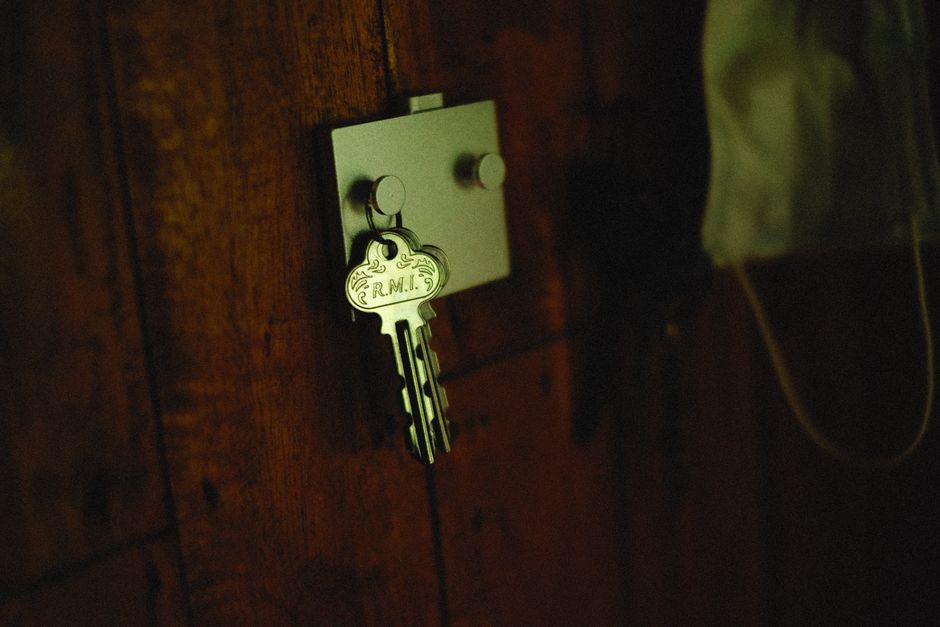
One of the smallest security habits with the biggest effect is to keep your keys in a consistent visible location near the door. When you come in, the keys go on the hook or the dish next to the door. When you leave, you pick them up.
This habit prevents two failures. The lost-key failure, which leaves you outside the apartment trying to figure out what to do, and the rushed-departure failure, where you leave the apartment without locking the door because you were hurrying to find your keys.
The keys location should also be visible from the door, so a glance confirms they are there. Hidden keys in a drawer or a bag get lost. Visible keys on a hook do not.
What to do with spare keys
Many residents give spare keys to a partner, a friend, a family member, or hide one outside. Each option has tradeoffs.
Giving a spare to someone who lives nearby is the safest pattern. They have your spare. They can let you in when you are locked out. The risk is low because they are unlikely to lose it.
Hiding a key outside (under a mat, in a plant) is much riskier than people think. Most hiding spots are obvious. A determined intruder will find a hidden key in minutes. The convenience is rarely worth the risk.
If you live alone and you do not want to give a spare to anyone, consider a lockbox attached to the building (with permission) or a digital lock that you can open with a phone or a code. These add cost and complexity but eliminate the spare-key problem entirely.
The weekend trip protocol
When you leave for a weekend or longer, a few small steps reduce the apparent emptiness of your unit:
- Pause your mail or packages so they do not pile up at the door.
- Leave one light on a timer in the living room or bedroom.
- Close blinds in rooms that hold valuables.
- Tell one neighbor you trust that you will be away, so they can keep a casual eye out.
- Do not announce your trip on public social media in real time. Post about it after you return.
- Make sure the deadbolt is engaged and the door tested before you leave.
None of these are paranoid. They are the small markers that signal a unit is still inhabited even when no one is home.
The building entry layer
Your front door is the last layer of security. The building entry is the first. A secure building entry (locked front door, key fob, intercom system) does most of the security work for you. Most apartment thefts happen when the building entry is compromised, often by someone holding the door for a stranger or by a propped door.
The habit that protects the building is to never hold the door for someone you do not recognize. This sounds rude but is the standard practice in most secure buildings. If someone is a legitimate resident, they have a key. If they are a visitor, they should be buzzed in by their host. If they are a delivery person, they should use the building’s designated process.
If you let someone in who turns out to be entering an apartment that is not theirs, the responsibility partially falls on you. The building staff will tell you this in the awkward conversation afterward. Better to be slightly rude at the door than to be the person who let in a problem.
The phone-by-the-bed question
For night safety, keep your phone within reach of the bed, charged. This is the difference between being able to call for help quickly if something happens and fumbling in the dark for a device you cannot find.
Many residents keep their phone in another room to encourage better sleep. This is a reasonable tradeoff but not for everyone. A middle path is to keep the phone in the bedroom on silent, in a known location, ready to use if needed.
The cumulative habit
Security in an apartment is not a single product or a single decision. It is a set of small habits done consistently. The deadbolt, every time. The pull test, every time. The peephole, every time. The keys on the hook. The door held only for known residents. None of these are dramatic. All of them are simple. Together they account for most of the difference between an apartment that is rarely entered and one that is occasionally vulnerable. The intruder does not pick the apartment with the bigger lock. They pick the apartment that someone forgot to lock at all.
Frequently asked
How often should I check that my deadbolt is working properly?
Every few months. The strike plate alignment can drift over time. A deadbolt that does not fully engage looks locked but is not.
Is it worth installing a smart lock in a rental?
Sometimes, with landlord permission. Most smart locks can be installed and removed without modification, leaving the original lock in place. The convenience of keyless entry can be significant.
What should I do if my key breaks in the lock?
Call a locksmith. Do not try to dig out the broken piece yourself. Many locksmiths can extract a broken key without replacing the lock. The cost is much lower than a full lock replacement.
Should I change the locks when I move into a new apartment?
Most leases give the landlord the right to change locks between tenants. Confirm with the landlord that the locks were changed. If not, request that they be. The cost is usually covered by the landlord.
Related guides
 Community Safety
What to Do When a Stranger Tailgates Through the Door
A stranger walking in behind you is the most common building security failure. A calm, repeatable approach that keeps your…
 Community Safety
A Water Leak From the Unit Above: What to Do in the First Hour
A leak from the unit above rarely announces itself politely. You notice a stain spreading across the ceiling, a drip…
 Community Safety
Knowing Your Neighbors as a Quiet Safety Layer
Knowing the people on your floor is one of the most underrated safety upgrades in apartment living. A grounded guide…