Quiet Hours, Honestly Explained
Quiet hours are not a magic spell that turns off sound. They are a shared social agreement about which kinds of noise belong in which parts of the day.

Almost every lease in the country mentions quiet hours. Almost no lease explains them. The standard line is something like, “Quiet hours are from 10pm to 8am.” That is technically accurate and practically useless, because it tells you nothing about the part that matters most. Quiet hours are not really about silence. They are about which kinds of sound a reasonable person expects to hear at different times of the day.
If you understand that, you understand most of the noise conflicts in a building. If you do not understand it, you will find yourself either guilty of being too loud or angry that your neighbor was, often without realizing why the lines fell where they did.
What quiet hours actually cover
Most quiet hour rules cover three categories of sound. The first is recreational noise. Music, parties, video games at high volume, TV through the wall, conversations on a balcony at midnight. The second is amplified or mechanical noise. Vacuuming, treadmills, power tools, the louder kitchen appliances. The third is repeated impact noise. Heels on a hardwood floor, repeated door slams, a basketball bouncing on a balcony.
What they generally do not cover is ordinary domestic life. A baby crying. A toilet flushing. A door closing once. The shower running. People walking around in socks. The fridge humming. Most leases do not consider those noises violations even at 2 in the morning, because the alternative is a building where humans cannot live their lives.
This is the part most people miss when they get upset about their neighbors. The footsteps you hear at 11:30 are usually not a quiet hours violation. They are someone going to the bathroom. The conversation you hear at 7:45 in the morning is usually not a violation either. It is someone making coffee with their partner.
When you are the noisy one
Once you accept the categories, you can audit your own life. Most of us are the noisy one for someone at some hour. If you are unsure, walk into the apartment below or beside yours, with their permission, and stand quietly while a roommate or friend goes about their normal evening upstairs. Most people are stunned by what is audible. The dishwasher you barely think about is a small earthquake to the unit below.
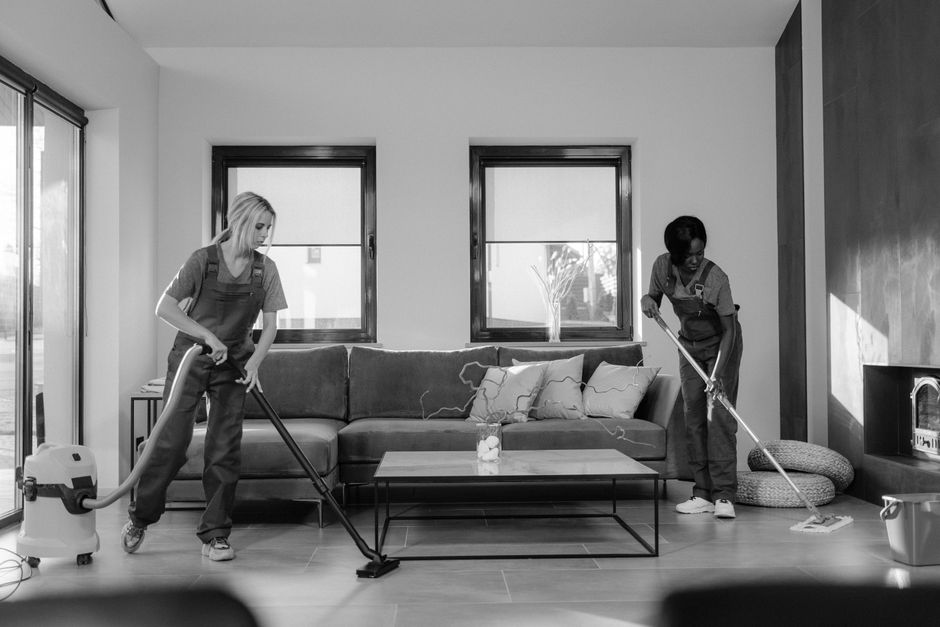
The practical lessons usually are: run the dishwasher before 9 in the evening, vacuum during daytime hours on weekdays, and walk in soft footwear in the apartment if your floors are hard. None of those require a quiet-hours rule to enforce. They are just polite habits in a shared building.
Hosting is the place where most well-meaning people accidentally cross the line. A dinner party that started at 7 can easily roll into a louder conversation by 11 without anyone noticing the time. Set a quiet pivot. After 10, the music turns to a softer playlist or off entirely. Conversations move away from any walls that share with another unit. If you would not want to be on the other side of that wall, you are probably already past the line.
A two-line message to the neighbors above and below the day before a planned dinner is one of the most powerful pieces of building goodwill you can build. “Hi, we are having a few friends over Saturday from 7 to 11. Should be fine but text me if anything bothers you.” That single message removes most of the conflict possibility.
When you are on the receiving end
If you are the one being woken up, the timing of your reaction matters. Pounding on the wall at 2 in the morning invites an instinctive defensive response, not a quiet apartment. A short, calm message the next morning is more effective. Something like: “Hey, the music came through the wall until about two last night and it kept me awake. Is there a way to bring it down after midnight?”
Notice the framing. You did not call them rude. You did not ask them to never have friends over. You named the time, named the impact, and asked for a small adjustment. That is the conversation most people respond to.
If the noise is genuinely a quiet-hours violation that happens repeatedly, you can document it. Note the time, the type of noise, and how long it lasted. Building management will eventually respond to a pattern that is documented. They will not respond to one frustrated email about a single Saturday.
The categories that always cause trouble
Some noises are reliably the source of conflict because they sit in the middle of the day-and-night gap. Here are the ones to watch for in your own life:
- Treadmills and exercise bikes. The vibration travels much further than the sound. A rubber mat helps, but morning before 7 is risky no matter what.
- Vacuum cleaners. A weekend morning vacuum at 8 is often the line. Push it to 10 if you can.
- Late-night showers in old buildings. Old pipes can be surprisingly loud through a wall. There is not much to do except be aware.
- Heels on hardwood after 10. Slip on indoor shoes when you get home.
- Outdoor balcony conversations. A whispered conversation on a balcony at 1 in the morning carries clearly into other balconies. People rarely realize.
- Pet bursts. A short dog burst or a cat thudding off a counter is forgiven once. Repeated bursts are read as a pattern.
The other side of quiet hours
Quiet hours have a softer twin that gets less attention. There are also hours during the day when noise is expected and acceptable. Vacuuming at 11 in the morning is normal. A short power tool moment on a Saturday afternoon is normal. The piano lesson at 4 is normal. A neighbor who complains during those hours is the one breaking the social contract, not you.
Holding the line on this is part of being a confident, settled resident. If a neighbor knocks because your dishwasher is running at 8:30 in the evening, you can politely point out that this is well inside daytime hours. You do not have to apologize for normal life happening. The agreement is that both sides give a little. Quiet hours protect them in the night. Daytime sound is yours.
The phrase that diffuses most disputes
If a noise conversation does happen and you can feel it tensing, there is a sentence that almost always helps. “I want to be a good neighbor. What can I do?” You have given the other person a reason to lower their guard. You have invited a specific suggestion. You have signaled that the relationship matters to you. Most people, even ones who were already on edge, will respond to that opening. The neighbor with the dog softens. The downstairs tenant relaxes. The hallway becomes a hallway again.
Frequently asked
What if my building does not list specific quiet hours?
Default to the local norm, which is usually 10pm to 8am on weekdays and 11pm to 9am on weekends. Most disputes assume that range even without an explicit lease line.
Are quiet hours legally enforceable?
In most leases yes, because they fall under the broader quiet-enjoyment clause that protects every tenant in a building. Local noise ordinances often back this up, but enforcement is usually informal through the building rather than the police.
Is a crying baby a quiet-hours violation?
No. A crying baby is ordinary domestic life, which sits outside quiet-hours rules. Sleep disturbance from a neighbor with a baby is real but not something the lease will help you with. White noise on your side is the realistic fix.
How do I bring up a noise issue without seeming like a complainer?
Mention the specific time and impact, ask for a small adjustment, and do not bring up a backlog of past noises. One specific request is heard. A list of grievances feels like an attack.
Related guides
 Neighbor Etiquette
The Quiet Power of Remembering a Name
Remembering a neighbor's name within the first few encounters is one of the smallest and most powerful skills in shared…
 Neighbor Etiquette
The Borrowed Lawnmower Problem
Borrowing something from a neighbor sounds simple. Most lasting neighbor disputes are quietly born in moments where the borrowing did…
 Neighbor Etiquette
Holiday Decorations and the Polite Range
Holiday decorations are joyful in moderation and contentious in excess. A grounded look at what makes a display feel warm…