Hosting a Loud Night Without Burning a Year of Goodwill
A single loud evening is usually forgiven. A single loud evening handled badly can quietly erase eighteen months of polite hallway hellos.


Every once in a while, you have a real reason to host. A birthday, a long-distance friend in town, a small celebration that has been on the calendar for months. You have done the work to be a good neighbor all year, and now you want one evening that is louder than usual. The temptation is to either undershoot the night (so quiet your friends feel watched) or overshoot it (so loud you lose the trust you built). There is a workable middle, and it is mostly about planning the parts most hosts skip.
A good hosted evening in shared living is not silent. It is well-handled. Neighbors do not mind hearing a few hours of laughter. They mind being surprised by a fourth hour, being kept up past midnight, and being given no warning that any of it was coming.
Tell your neighbors before, not after
The single most powerful thing a host can do is send a short, friendly message a day or two before. It does not need to be long. Something like, “Hi, we are having a few friends over Saturday from 7 to 11. Should be on the calmer side but wanted to give you a heads up. Text me if anything bothers you and I will adjust.”
Notice what that message contains. A specific time window. An honest expectation. A direct contact line. Permission to complain. Those four things together transform the night. Even if it gets a little louder than planned, the neighbor already feels included and respected. They will tap on the wall in their head, not on your door at midnight.
Send the message to the units sharing a wall with you, the unit above, the unit below, and the unit directly across the hall. That covers most of the people who will feel the night. You do not need to message the entire floor, only the ones close enough to be affected.

Pick the right night
Friday and Saturday are the most forgiven host nights. Sunday is a difficult choice because most people have work the next day. Thursday is fine for low-energy evenings but reads as inconsiderate for anything loud. Holiday weekends are flexible. School-night weekdays should be very quiet by 10.
The time matters as much as the night. A 7-to-11 window is usually fine. A 9-to-1 window is going to test goodwill. If your evening has a real reason to run later, start earlier. Begin at 5 with food. The loud part of the evening will then peak at 8, not at 11.
Plan the volume curve, not just the start time
Most louder evenings follow a predictable curve. The first hour is conversation and food. The second hour has the music up and the laughter rolling. The third hour is the peak. The fourth hour is the slow wind-down. The fifth hour, if there is one, is the cleanup or the quieter conversations after the bulk of guests have left.
Design the night so the peak happens before quiet hours, not after. Move the music down at 10. Move it to background level at 10:30. Switch from playlists with bass to something more acoustic and conversational. Most guests do not notice the music change. They feel the energy gently soften. They start saying their goodbyes naturally.
Most through-the-wall complaints are about bass. A song at moderate volume travels almost nothing if its low frequencies are gentle. Switch to acoustic or jazz playlists for the later hours of an evening. The vibe stays warm. The downstairs neighbor stays asleep.
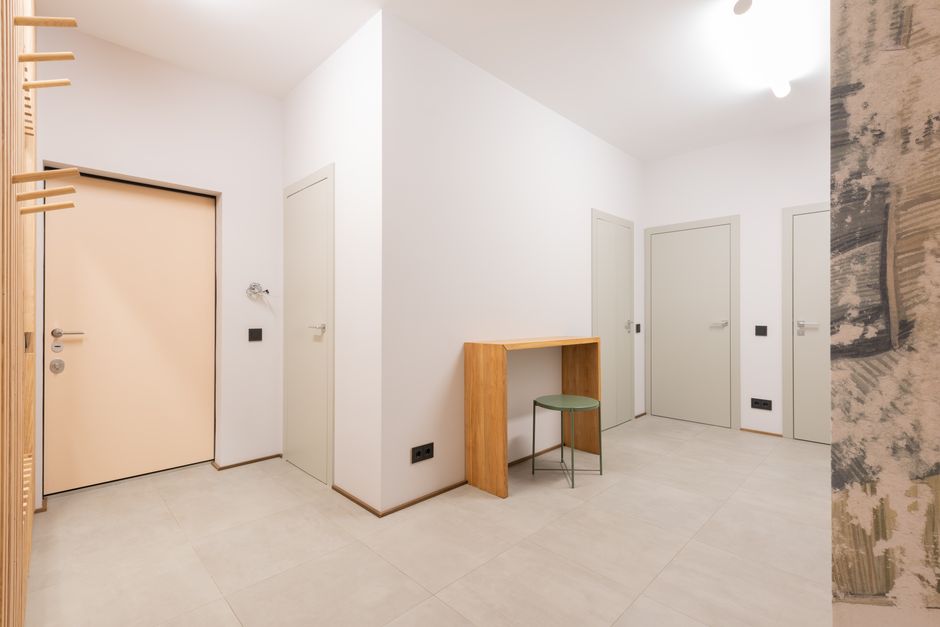
The hallway and the door
The most overlooked source of loudness during a hosted evening is the hallway. Doors opening and closing, conversations between arriving and departing guests, loud goodnights echoing in a stairwell. Even if your unit is well-managed for sound, a noisy hallway will draw a complaint that lands on you.
Two small habits handle this. First, tell guests as they arrive that the building has thin walls and you would like to keep the hallway calm. People listen on the way in. They also listen on the way out, which is when most hallway problems happen. Second, walk people out yourself for the first part of the evening. A host saying goodbye at the elevator naturally lowers the volume of the goodbyes.
The guest who does not get it
Every hosted evening has at least one guest who does not get it. They are louder than the room. They start a hallway conversation at midnight. They want to play one more song at full volume. The host has to manage them, kindly but clearly. A short, direct line works. “Hey, my upstairs neighbor is on call tonight, so we are keeping it gentle. Can you bring it down a touch?” That sentence almost never gets pushback. The guest hears that the host cares, and they adjust.
Avoid making your neighbors a punchline for the guest. The night will end. Your neighbors will be there tomorrow. A guest who jokes about how strict your building is, said within hearing distance of the hallway, is one of the surest ways to lose goodwill quickly.
Cleanup matters too
The cleanup is part of the evening for your neighbors. Stacking dishes loudly at 1 in the morning, rolling out a recycling bag of bottles down the hall, dragging chairs across a hardwood floor, all of these reach the units around you. Schedule the loud cleanup for the morning, not the night of. The night of, do the soft parts (collecting cups, putting food away). Leave the dishwasher, the recycling, and the chair re-arranging for after 9 the next morning.
The day-after thank-you
The morning after a hosted evening, send a short follow-up to the neighbors you warned in advance. A line like, “Thanks for being flexible last night, hope you slept fine. Let me know if anything was off.” This single message resets the relationship. Even if they have a small complaint, they will deliver it in the warmer context you have just created.
Notes work here too. A small chocolate bar with a thank-you sticker, left at their door, is a memorable gesture for the price of a candy bar. Most neighbors will never need this. The ones who do will remember it for years.
What about the night that goes wrong
Sometimes the evening still slips. The music is too loud past midnight. A neighbor knocks. The party is briefly awkward. Apologize at the door, immediately, and bring the volume down right there. Do not argue. Do not defend. The neighbor will read your in-the-moment apology as integrity and the night will recover.
The next morning, follow up. A note, a knock, a small gift. Acknowledge what happened, name the specific moment, and say what you will do differently next time. A loud evening that ended with a knock is recoverable. A loud evening that ended with a knock you brushed off is not. Reference: Nolo’s legal encyclopedia on neighbor noise and disputes.
Host-night neighbor-goodwill checklist
- Send a heads-up message 24 to 48 hours out to the units above, below, beside, and directly across the hall, including your time window and your phone number.
- Pick Friday or Saturday when possible, and avoid Sunday or school-night weekdays for anything louder than a quiet dinner.
- Aim for a 7-to-11 window rather than 9-to-1 so your peak hour lands well before quiet hours begin.
- Swap bass-heavy playlists for acoustic or jazz after 10 p.m., and drop the music to background level by 10:30.
- Remind arriving guests that the hallway carries sound, and walk early departures to the elevator yourself to keep goodbyes quiet.
- Save the noisy cleanup, meaning the dishwasher, recycling bags, and chair moving, for after 9 the next morning rather than the same night.
- Send a short thank-you note to every neighbor you warned in advance, and invite feedback so any small annoyance surfaces early.
- If a neighbor knocks, apologize at the door, bring the volume down immediately, and follow up the next day with a written note or small gift.
What hosting well builds, over time
Every well-handled evening adds a small amount of trust to your account with the building. After a few of them, the occasional louder event is met with patience instead of complaints. You become known as the unit that hosts well, not the unit that hosts loud. That reputation is worth tending. It opens doors, literally and figuratively, in the building you live in. The single evening of music is fine. The pattern of considerate hosting is what neighbors remember.
Frequently asked
How loud is too loud at 9 in the evening?
You should be able to hold a normal conversation at the dining table without raising your voice. If guests are shouting to be heard, the music is already at a level your neighbors are noticing.
Should I invite my neighbors to the party?
Optional. A polite invitation can build goodwill, but most neighbors prefer the head-up message to the formal invite. If you do invite them, make it easy to decline. "Feel free to drop by if you want."
What if my neighbor complains anyway, despite my warning?
Apologize at the door, bring the volume down, and follow up the next day. Even an evening with a complaint can end as a small win if you respond with grace in the moment.
Is there ever a reason to skip the heads-up message?
Only if the evening is genuinely quiet (a few friends, low music, indoor only). Once the night involves more than four to five people or music above background level, send the message.
Related guides
 Neighbor Etiquette
The Note Slipped Under the Door: When to Write One, When to Knock
A short, careful note slipped under a neighbor's door has resolved more disputes than most people realize. It has also…
 Neighbor Etiquette
The Quiet Power of Remembering a Name
Remembering a neighbor's name within the first few encounters is one of the smallest and most powerful skills in shared…
 Neighbor Etiquette
Saying Hello in the Hallway: A Surprisingly Hard Skill
The hallway hello looks easy in theory and surprisingly tricky in practice. A grounded look at how to make it…