The Building Co-Working Space, in Real Life
A building co-working space looks great on paper. In daily use, it has its own etiquette that residents pick up quickly or not at all.

Building co-working spaces are increasingly common amenities, especially in buildings targeting remote workers. They are usually pleasant. They occasionally are not. The difference is almost entirely about etiquette. Here is how to be a good co-working resident, and what to expect when others are not. Reference: Community Associations Institute’s resources on shared amenities.
The general use rules
Most building co-working spaces have basic posted rules:
- Quiet voices, no loud phone calls in shared seating.
- Phone calls in designated phone rooms if available.
- No food at desks; eating in designated areas.
- Conference rooms by reservation only.
- Personal items not left unattended for extended periods.
- Clean up after yourself before leaving.
Read the rules when you first start using the space. They are usually displayed near the entrance. Following them consistently is the simplest path to being a low-conflict user.
The phone-call question
The single most-violated rule in building co-working is phone calls at the desk. Even quiet phone calls are audible to nearby workers. Multiple simultaneous calls turn the space into a noisy crosstalk environment that defeats the purpose.
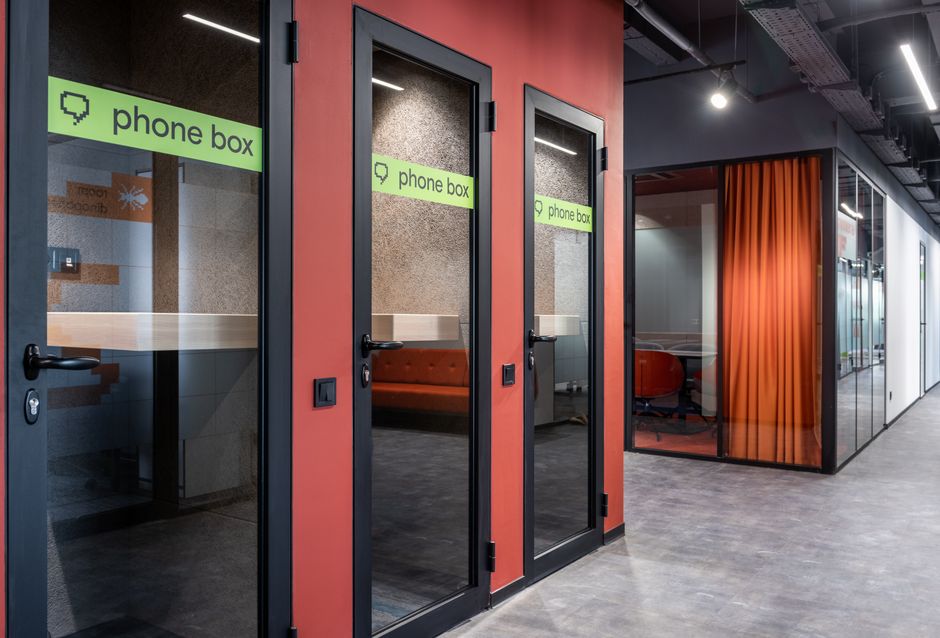
Most building co-working spaces have small phone booths or designated call areas. Use them. If your building does not have a phone area, take your call back to your apartment.
If you must take a brief call at your desk (under one minute, urgent), step away from the desk area, take it quickly, and return. Anything longer should move.
Video calls with audio out loud are not appropriate at shared desks. Even with headphones for incoming audio, your half of the conversation is audible. Video calls belong in phone booths, conference rooms, or your apartment.
The desk-claiming question
Most building co-working spaces are first-come-first-served. You arrive, you use an available desk, you leave when done. The implicit norms:
- One desk per person.
- Brief absences (bathroom, coffee) are fine; leave a small item to indicate the desk is still in use.
- Extended absences (lunch break, errand) mean the desk is technically available.
- End-of-day, take all your stuff. Do not leave a setup that suggests the desk is yours tomorrow.
If you need a specific desk consistently (a particular monitor setup, a corner spot), some buildings allow reserved or dedicated desks for an additional fee. Check with management.
The conference-room booking
Most co-working spaces have a small conference room for meetings. The booking system varies. Some buildings use online calendars. Others use sign-up sheets. Some have staff who coordinate.
Book in advance if you need it. Last-minute bookings sometimes work but should not be assumed. Respect the booking time; do not run over into the next person’s slot.
If you finish early, the kind move is to clear the booking so others can use the room. If you need to extend, check whether the next slot is open and only extend if it is.
The noise floor
Co-working spaces have a baseline of acceptable noise. Typing. Quiet conversation between two people sitting near each other. Keyboard sounds. The occasional headphone leakage at a moderate level. Brief whispered exchanges.
What is not acceptable: loud typing on keyboards with high-action keys, sustained conversation between people sitting apart, video or audio playing without headphones, eating crunchy foods at the desk.
If you are a heavy typist, consider whether your keyboard is appropriate for shared spaces. Mechanical keyboards with loud switches are great at home and disruptive in co-working. A quieter membrane keyboard for shared-space use is a reasonable accommodation.
The food and drink
Most building co-working spaces allow drinks at desks but restrict food. The rules vary. Coffee, water, and similar drinks are usually fine. Snacks should usually be in the cafe or break area rather than at desks.
Crunchy or strong-smelling foods are particularly disruptive at desks. Even if not technically prohibited, the consideration for nearby workers suggests these belong elsewhere.
Clean up immediately after yourself. Spilled coffee, crumbs, wrappers all signal that you treat the shared space as your own. The next user does not want to deal with your mess.
The headphone question
Headphones in co-working spaces signal “I am working, please do not interrupt me unless necessary.”
If you need to ask someone something, get their attention briefly with a wave or a soft tap. Wait for them to remove a headphone before launching into your question. Respect that they were focused.
If you are the one wearing headphones and someone is trying to get your attention, pause your audio and engage briefly. Long conversations should move to a non-desk area to avoid disrupting other workers.
The conversation with another resident
If you see a neighbor in the co-working space and want to chat, do not approach them at their desk for an extended conversation. They are working. A brief wave is appropriate. For a longer conversation, suggest moving to the cafe area, the lobby, or another time.
If a neighbor approaches you at your desk, you can engage briefly or politely defer. A short line works: “Good to see you. I am in the middle of something, can we catch up later?”
The conference-call cluster
If your building has a cluster of phone booths or call rooms, the etiquette there is:
- Use them for actual calls, not as quiet rooms for non-call work.
- Keep calls within a reasonable duration. Multi-hour use ties up resources others need.
- Clean up the room before leaving. Wipe surfaces, throw out trash, leave the chair in position.
- If the room has a door, close it during the call so audio does not leak out.
The phone booths are the relief valve for the co-working space’s quiet-rule. Using them well is part of why the rest of the space works.
The personal-items question
Do not leave personal items at desks overnight unless your building specifically allows it. Tablets, laptops, headphones, drawers of supplies, these all create the appearance that the desk is yours, which conflicts with the shared nature of the space.
If you need persistent storage, ask whether the building offers small lockers or assigned desks. Many do, often for an additional fee.
For brief absences, a small item (a book, a notebook) on the desk is fine. A full work setup left overnight is not.
What makes the space work or fail
A building co-working space is a real amenity when it functions well. It provides a third space for residents who work from home or who want occasional time outside their unit. It can be more productive than home and more flexible than a commercial co-working subscription.
The space works when residents respect the shared focus. Quiet voices. Calls in booths. One desk per person. Clean as you go. Awareness of other workers.
The space fails when residents treat it as their personal office or their conference room. Phone calls at the desk. Spread-out workspaces. All-day occupancy. Loud conversations. These small violations, multiplied across the resident base, turn a useful amenity into a frustrating one.
The choice is at the individual level, every visit. The next time you use the space, run a quick check. Are you contributing to or extracting from the shared focus? Five small habits, applied consistently, are most of what building co-working etiquette asks. The cost is small. The benefit, both for you and every other resident who uses the space, is real and durable.
Frequently asked
Can I bring a non-resident guest to the co-working space?
Usually no, or only with explicit guest passes. Check building rules. Co-working spaces are typically resident amenities.
What if I cannot find a desk during peak hours?
Find an off-peak time if possible. If the space is consistently overcrowded, raise capacity concerns with building management.
Is it okay to take video meetings in the co-working space?
Only in phone booths or designated call rooms. Video meetings at shared desks are too disruptive even with headphones.
Can I leave my laptop at a desk while I get coffee?
Brief absences (under 15 minutes) are usually fine, especially if you leave a small placeholder item. Longer absences mean the desk is technically available again.
Related guides
 Shared Spaces
Stairwells: When You Use Them and When You Pause
Apartment stairwells are utility spaces with their own subtle etiquette. A grounded guide for residents who use them regularly.
 Shared Spaces
The Building’s Grill: Hosting Without Annoying Anyone
A shared building grill is one of the better community amenities when used well. A grounded guide to using it…
 Shared Spaces
Rooftops, Sunsets, and Other Shared Pleasures
A shared rooftop is one of the great apartment amenities. A grounded guide to using it well without creating tension…