The Building’s Grill: Hosting Without Annoying Anyone
A shared building grill is a wonderful amenity until you become the resident who uses it badly. A grounded guide to staying on the right side.


A shared building grill is a real amenity. It deserves real etiquette. Most of the problems are small and preventable if residents follow a few patterns that nobody bothers to write down. Here they are.
The reservation question
Some buildings have formal reservation systems for the grill. A signup sheet, an online calendar, a check-out system. Use it consistently. The system exists because of past conflicts about overlapping use.
If your building has no formal system, the informal norm is usually first-come-first-served with a soft time limit. About two hours is the typical window for a single use. Past that, you are dominating the amenity.
If you want a longer session (a real cookout for friends, a special meal), check with your building. Some allow it with advance notice. Some have a maximum time even for special events. Plan around the rules rather than assuming flexibility.
The cleanup, in detail
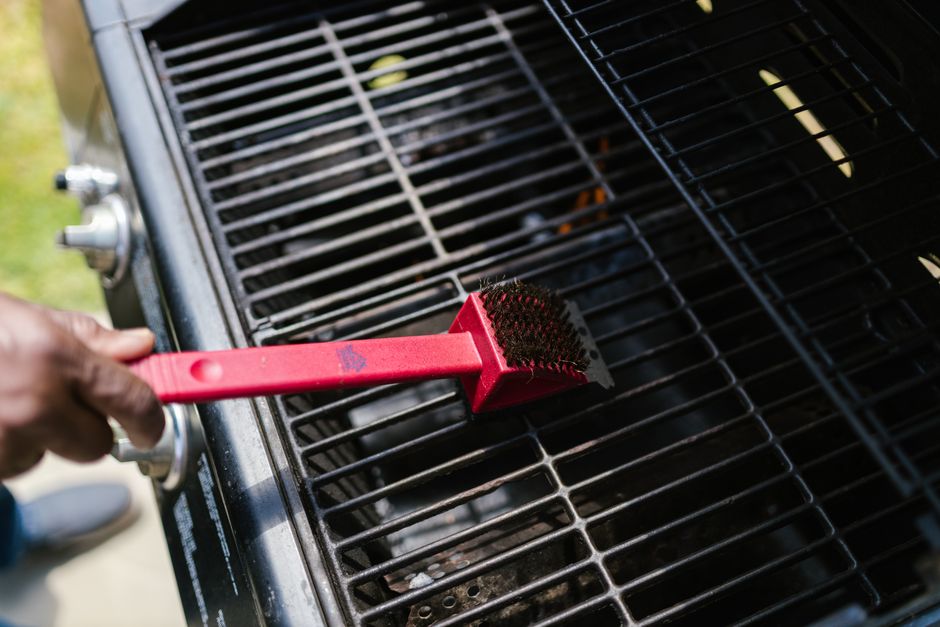
The single most-violated rule of shared grills is cleanup. The previous user often leaves the grill with grease, food bits, and ash that the next user has to deal with before they can cook.
The right cleanup sequence:
- Turn off the grill and let it cool slightly (or finish cooking and clean while still hot for easier scrubbing).
- Use the grill brush to clean the grates while they are still warm.
- Empty any drip pan or ash collector.
- Wipe down the side tables and any surfaces you used.
- Turn off the gas valve.
- Close the grill lid.
- Throw away any trash, paper plates, foil.
This takes about ten minutes. The next user finds a clean grill. The cycle continues.
Most grills have a grease collection pan underneath. Check it. If full, empty it into a covered container and dispose of properly (not down a drain). A full grease pan is a fire risk and a smell source. The two-minute check protects everyone who uses the grill after you. Reference: NFPA’s grilling safety guidance.
The propane responsibility
If your building’s grill runs on propane, the tank gets used up. Some buildings refill it automatically. Others expect users to monitor and notify management when it is empty.
If you are the user when the tank runs out, do not just leave it for the next person. Tell building management. They can swap or refill. If your building has a designated user-responsibility for propane, follow it (some have a deposit system where each user contributes a small amount).
Do not bring your own propane tank without permission. Most buildings have specific tanks they use and unauthorized tanks can be a safety issue.
The noise question
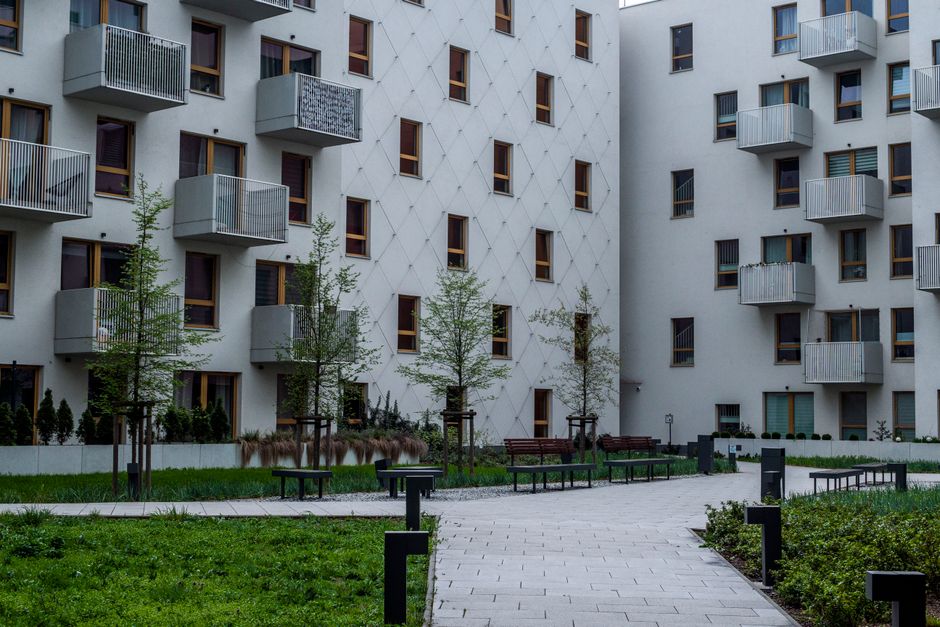
A grill itself is quiet. The gathering around it often is not. Outdoor conversations carry. Laughter, music, and group dynamics that feel normal in a private backyard are amplified in a courtyard that several buildings share.
The volume rule for courtyard gatherings is the same as for any shared space. Indoor voices, not party voices. Music at a low background level, ideally with one Bluetooth speaker rather than several. The expectation is that residents in nearby units can have their windows open without your gathering becoming their soundtrack.
For larger gatherings (a birthday party, a group event), give nearby residents a heads-up. A short message a day before, similar to the indoor-hosting heads-up. “We are doing a small gathering at the courtyard grill Saturday from 4 to 7. Should be fine, but let me know if anything bothers you.”
The smoke question
Grill smoke drifts. Windows on the first three or four floors of buildings near the courtyard are within smoke range. If those windows are open during your grill session, residents are getting your meal’s smoke in their living rooms.
You cannot fully prevent this, but you can mitigate it:
- Keep the grill lid mostly closed during high-smoke cooking (searing meat, smoking sausages).
- Avoid super-fatty foods that produce sustained smoke.
- Do not start a smoldering wood smoke or use lighter fluid on the grill.
- Choose timing when nearby windows are less likely to be open (cooler hours, after most residents have come home).
If a neighbor mentions smoke is reaching them, apologize and adjust. Most residents accept occasional grill smoke as part of summer life. Persistent or excessive smoke is what generates real complaints.
The food-storage question
Outdoor cooking requires bringing food and supplies to the grill, often across the building. The polite version of this is to make as few trips as possible, keep raw and cooked foods separated, and not occupy lobby or hallway space with grill supplies.
If you need to prep food, do it in your apartment, not at the grill. The grill area should be for cooking, not for chopping, marinating, or assembling.
Bring trash bags. Take everything out with you. A clean grill area should mean no leftover marinade containers, no foil scraps, no condiment bottles, no paper plates blown into corners.
The pets and children consideration
Pets and children at the grill area need supervision. The grill itself is hot. The drip pan can be dangerous. Children running into a hot grill is a known emergency room visit pattern.
Keep children at a safe distance from the grill when it is on. Pets on a leash at your feet, not roaming the area. Do not let either approach the grill while you are cooking.
This applies to other people’s children and pets too. If a neighbor child wanders into your grill area unsupervised, gently redirect them. “Hey, the grill is hot, can you wait over there?” Mention to the parent if appropriate.
The group-takeover problem
A common grill-area issue is a single group taking over the entire courtyard for an extended period. Tables pulled together, chairs spread out, music playing, kids running. The whole courtyard becomes their event venue, excluding other residents from the shared space.
The fix is to be aware of how much space you are using. The grill is yours during your time slot. The rest of the courtyard is shared. Other residents may want to use the bench, walk through the area, or sit elsewhere. Your gathering should not prevent that.
For large events, the building event space (if available) is often the right venue, not the courtyard. The courtyard is for moderate use that respects the shared nature of the space.
The conversation with other users
If you arrive at the grill and someone else is using it, the polite move is to ask their timeline. Are they about done, or do they have a while to go? A direct question is easier for both sides than waiting and guessing.
If they have a while, find another time or come back later. Do not hover. The hovering creates pressure and ruins the experience for both parties.
If you are the one being asked, give an honest answer. A specific estimate (about thirty more minutes) lets the other person plan. A vague answer does not.
The shared-meal possibility
One of the unspoken great things about courtyard grills is the occasional shared moment between residents. You are cooking. Another family arrives. The two groups end up chatting. Maybe sharing a side dish. Sometimes an unexpected small friendship forms.
Be open to this. The grill is one of the few places in apartment life where natural mingling can happen. A friendly “Want to try a piece?” or “Need any tongs?” can lead to real connection.
This is not an obligation. Some grill users want privacy. Some want to focus on their meal. The openness is optional. When it happens, the building benefits in small lasting ways.
The cost of being a good grill user
A shared building grill is one of the best amenities a building can offer, when residents treat it well. It is a small piece of outdoor cooking infrastructure that creates moments of community, decent meals, and texture to the season. Buildings where the grill works well have residents who clean up, share time fairly, keep volume reasonable, and treat the amenity with respect.
The cost of being a good grill user is small. Ten minutes of cleanup. Awareness of others. Respect for time slots. Sensible volume. The benefit is years of being able to grill outside without the small frustrations that come with shared amenities. The choice is at the individual level, every time you cook. The building gets the grill it deserves, one user at a time.
Frequently asked
What if the grill is always dirty when I arrive?
Mention it to building management. They may need to add reminders, schedule periodic deep cleans, or implement a reservation system that increases accountability. Multiple residents raising the issue helps.
Can I host a birthday party at the grill?
Check building rules. Some allow larger gatherings with advance notice. Others limit grill use to small family meals. Bigger events often need a different venue.
Is it okay to grill in the winter?
Yes, if weather permits and the building does not winterize the grill area. Many residents enjoy grill use year-round in moderate climates.
What if a neighbor complains about smoke from my grill?
Apologize, mitigate where possible (closed lid, less smoky food), and consider their timing requests. Most neighbors accept occasional grill smoke. Persistent issues require adjustment.
Related guides
 Shared Spaces
The Polite Treadmill: Gym Manners in a Small Apartment Gym
A small building gym shared by hundreds of residents has its own etiquette. A grounded guide to using it well.
 Shared Spaces
Bike Rooms, Strollers, and Floor Politics
Bike rooms and stroller storage areas are small shared spaces with big political weight. A grounded guide for everyone involved.
 Shared Spaces
When the Pool Opens: Sharing Without Tension
A shared building pool is one of the most-loved amenities and one of the most-contested. A grounded guide to using…