The Courtyard Bench Problem
A courtyard bench shared by two hundred residents has its own unwritten rules. A grounded look at how to use one without making a quiet enemy.


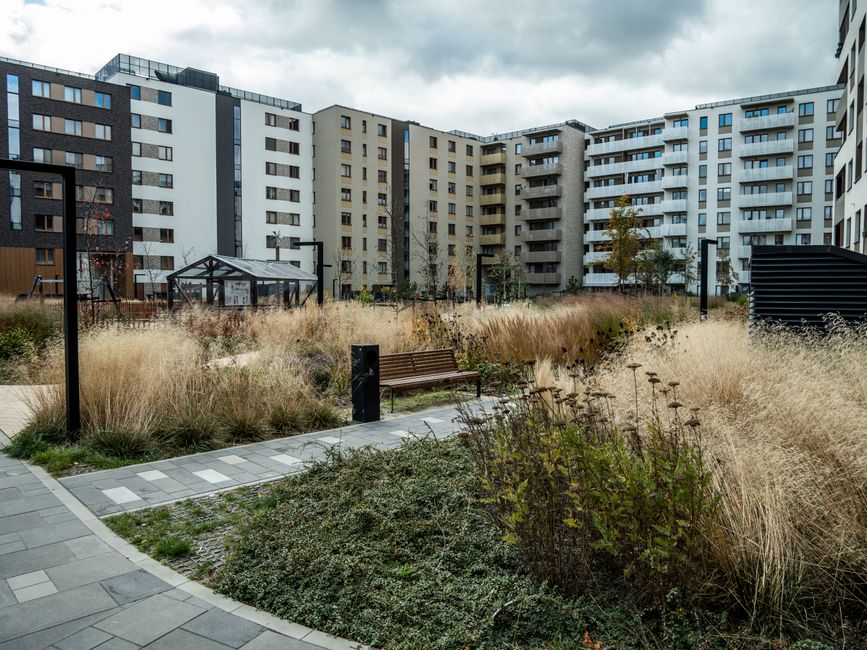
Most apartment buildings have at least one shared seating area. A bench, a small patio, a few chairs near the entrance. These spaces feel public but are not. They are shared, which is different. The etiquette of shared seating spaces is one of the more nuanced areas of apartment community life. Reference: Community Associations Institute’s overview of community association living.
The time-limit norm
Most shared benches have an informal time limit. About thirty minutes is the typical norm. Past that, you are occupying the bench in a way that prevents other residents from using it.
This limit relaxes when the bench is not contested. If nobody else is around, an hour is fine. If three residents are circling the courtyard looking for a place to sit, even fifteen minutes feels long.
The way to handle this is to be aware of who else is in the space. A quick scan when you sit down. Another scan after fifteen minutes. If others are now waiting, finish your moment and free the bench. If the space is quiet, stay longer.
The activities that fit, and the ones that do not
Some activities fit a shared bench. Reading. Eating a small snack. Drinking coffee. A short phone call. Sitting quietly. A brief conversation with a neighbor who joined you.
Activities that generally do not fit a shared bench:
- Long phone calls, especially loud ones.
- Working on a laptop for extended periods.
- Eating a full meal that takes up the whole bench.
- Smoking, especially in non-smoking buildings.
- Letting a dog occupy the bench seating.
- Listening to music or videos without headphones.
- Group gatherings of three or more people who fill the entire bench.
The general principle is that the bench is for individual or one-on-one quiet use. Anything that turns the bench into a private workspace or a group venue stretches its purpose past what most residents expect.
When you arrive at a bench and another resident is already there, the polite question is whether you should sit too or find another spot. If the bench is small (single occupancy), find another spot. If it is large enough to share, a friendly “Mind if I sit?” is the right opener. Most residents will welcome you or say if they would prefer privacy.
The phone-call problem
Phone calls on a shared bench are one of the most common etiquette violations. The bench is a quiet space. A loud call breaks the calm for everyone in the courtyard, not just the people near the bench.
If you need to take a call, keep it brief or move away. Walking and talking is often the right answer. The courtyard becomes your moving phone booth. You return to the bench when the call ends, if it still feels appropriate.
The exception is a very brief call (under a minute). A quick “I will call you back” or a confirmation of plans can happen on the bench without disturbing anyone significantly. Anything longer should move.

The dog question
Dogs on shared benches is a contested topic. Some buildings explicitly prohibit it (especially if the bench gets used by other residents for sitting). Others allow it with the dog on the floor.
The general rule, even where not explicit, is that a dog can be near the bench (at your feet, on a leash) but should not occupy the seat itself. Other residents may want to sit there next. Hair, paw prints, and the slight presence of a dog are not what a sitting resident wants to encounter.
If you bring a dog to the courtyard, bring a towel for the dog to lie on at your feet. Keep the leash short. Watch for any signs that another resident is uncomfortable around dogs and adjust accordingly.
The smoking question
If your building is non-smoking (most newer buildings are), the courtyard bench is not an exception. The rule applies in shared spaces too.
If your building allows smoking in outdoor areas, the bench is still the wrong place. The smoke drifts into the courtyard and into nearby windows. Move to a designated smoking area if one exists, or to the street outside the courtyard. Reference: the CDC’s guidance on secondhand smoke exposure.
Vaping is in a similar category. The vapor is less odorous than smoke but still bothers residents who are sensitive to chemical scents. The same rules generally apply.
The leaving-things question
Sometimes residents leave items on a bench to claim it temporarily. A book. A coffee cup. A jacket. The placeholder system works for very brief absences (a quick trip inside to grab something) but not for extended ones.
If you find a bench with abandoned items, give it about ten minutes. If no one returns, the items are either truly abandoned or the resident has forgotten them. Move the items carefully to a visible spot nearby and use the bench. The resident, if they return, can collect their items.
Do not throw away apparently-abandoned items. They might be returning. Treat them as misplaced rather than discarded.
The group-gathering question
If you want to gather with several friends or family in the courtyard, the bench is not the right venue. A group of four taking over the bench excludes other residents from the space and uses the bench in a way it was not designed for.
The alternatives are: book a building event space if available, gather in your unit, find a nearby park or public space, or sit on a blanket on the courtyard lawn (if your building has one) leaving the bench available.
For two-person conversations, the bench is fine. The line is roughly at three people who would all want to sit.
The seasonal patterns
The bench has different roles in different seasons. Summer evenings, it is high-traffic. Winter mornings, it is empty. The etiquette adjusts accordingly.
In peak season, the time-limit norm is enforced more strictly. In off-season, longer stays are accepted. Sensitivity to other residents’ needs is the key variable. Watch the courtyard activity and adjust.
Special situations also affect the bench. A resident who just received bad news may want privacy. A family with a child celebrating something may want a moment. A neighbor who is grieving may need quiet space. Sometimes the kindest move is to skip the bench yourself and let another resident have a moment.
The cleanup responsibility
The bench should look clean when you leave it. Take any trash with you. Wipe down any spills. If you brought a cushion or blanket, take it. Leave the bench as you would want to find it.
If you find a bench that someone else left messy, the kind move is sometimes to clean it up briefly. A wrapper or cup left behind is small enough to take to the nearest trash bin on your way past. This is contribution, not obligation. The cumulative effect over months is a bench that stays inviting.
The conversation rules
If you are on the bench with another resident, the conversation has its own rhythm. Brief is the default. Warmer if both sides engage. Quieter than indoor conversations because outdoor sound carries.
Avoid loud laughter, animated debate, or theatrical conversations on a shared bench. Other residents in the courtyard or in nearby units can hear you. The quieter tone is the courtyard tone.
If a conversation with a neighbor is going well and you want to extend it, suggest moving. “Want to walk around the block?” or “Should we grab a coffee?” These signal that you value the conversation enough to give it a better setting than a shared bench.
The bench as a test of shared living
The courtyard bench is a small piece of building infrastructure that quietly tests the social fabric. Buildings where the bench works well have residents who respect the unwritten rules. Buildings where the bench becomes a source of tension have residents who do not.
The choice is at the individual level. You can be the resident who occupies the bench for hours with a laptop and loud calls. You can be the resident who sits briefly, quietly, and yields to others. The choice you make affects the experience of every other resident who uses the space.
The bench, in the end, is a microcosm of shared living. Small, finite, valuable, shared. The etiquette is not complicated. It is the simple awareness that the bench is not yours alone. With that awareness, the courtyard becomes one of the small daily pleasures of building life. Without it, the courtyard becomes another quiet source of resentment. The choice is yours, every time you sit down.
Frequently asked
What if my building has multiple benches but they are always taken?
Mention it to building management. Sometimes additional seating is a reasonable improvement. Multiple residents raising the concern often gets faster results.
Can I sit on a bench during a phone call if I keep my voice low?
Brief and quiet is okay. Anything that requires sustained conversation should move. Other residents will appreciate the discretion.
Is it okay to nap on a bench?
Generally no in apartment courtyards. Napping makes the bench unavailable for others for an extended period and can look like a public-space use of a private-resident amenity. Nap in your unit instead.
What if a neighbor occupies the bench for hours every day?
Mention it to building management diplomatically. Sometimes the resident does not realize the impact. Direct confrontation usually does not work well.
Related guides
 Shared Spaces
Bike Rooms, Strollers, and Floor Politics
Bike rooms and stroller storage areas are small shared spaces with big political weight. A grounded guide for everyone involved.
 Shared Spaces
When the Pool Opens: Sharing Without Tension
A shared building pool is one of the most-loved amenities and one of the most-contested. A grounded guide to using…
 Shared Spaces
Trash Rooms: The Forgotten Etiquette
The trash room is one of the most-used and most-overlooked shared spaces in apartment buildings. A grounded guide to the…