What to Do When a Stranger Tailgates Through the Door
Tailgating is the most common building security failure. A short script handles almost every situation gracefully and keeps the door from becoming a vulnerability.


The most common security failure in apartment buildings is not a broken lock. It is a tenant holding the door for someone they do not recognize. The polite reflex to hold the door is one of the strongest social impulses we have. It also defeats the entire purpose of a key-controlled entry. Once you are aware of how often this happens, you start to see it everywhere. The person walking up behind you. The person waiting near the door pretending to look at their phone. The person carrying a box who definitely should not need your help. Each of them is testing the same reflex. Reference: CISA’s physical security guidance.
Tailgating is also one of the simplest security issues to handle, if you have practiced the script. The script is short, polite, and easy to deploy. Once you have it, the entry door becomes much harder to compromise without losing any goodwill with actual residents.
Why the reflex to hold the door is so strong
Holding doors is hardwired into most cultures as basic politeness. It signals friendliness, consideration, and trust. Refusing to hold a door for someone behind you feels rude. The rudeness is amplified when the person behind is moving quickly, looks tired, or is carrying something.
The challenge in apartment buildings is that the politeness reflex does not match the security need. The door exists to keep non-residents out. Holding it for someone you do not know defeats the system. The system was designed to require each entrant to use their own key, fob, or buzzer.
Resolving this conflict requires a small mental shift. The “polite” thing in an apartment building is to maintain the building’s security, not to hold the door. The polite alternative is to let the door close behind you and let the person behind you use their own credentials. This is the building’s expected behavior, even if it feels rude in the moment.
The basic script
The script for most tailgating situations is short. Once you have used it three or four times, it becomes natural.
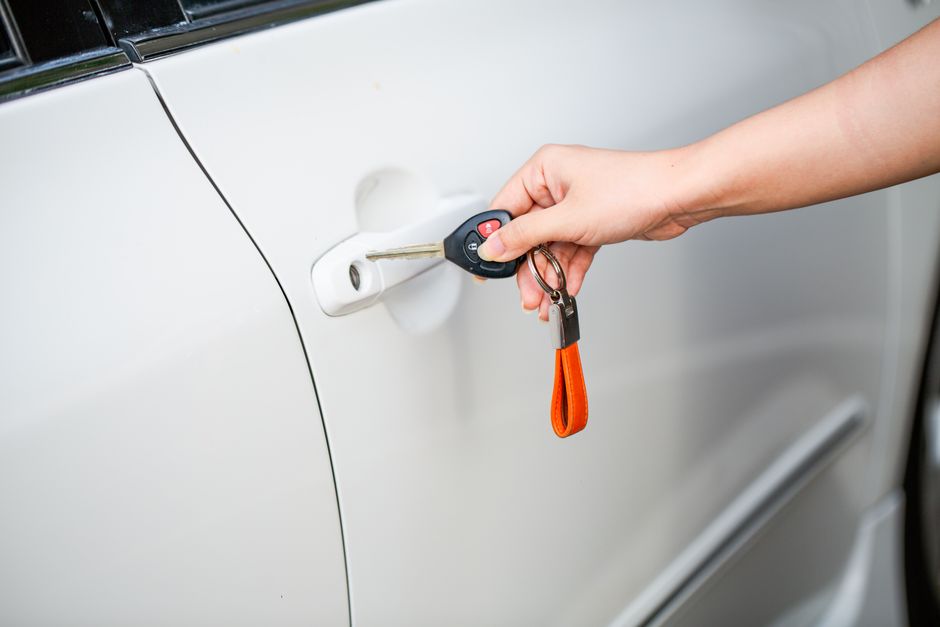
When you swipe your key and the door opens, walk through. Do not pause. As the door starts to close behind you, the person behind you may try to catch it. Turn around. Smile. Say one of:
- “Sorry, you will need to use your key. Building policy.”
- “You will have to badge in or buzz a unit. The building is strict about it.”
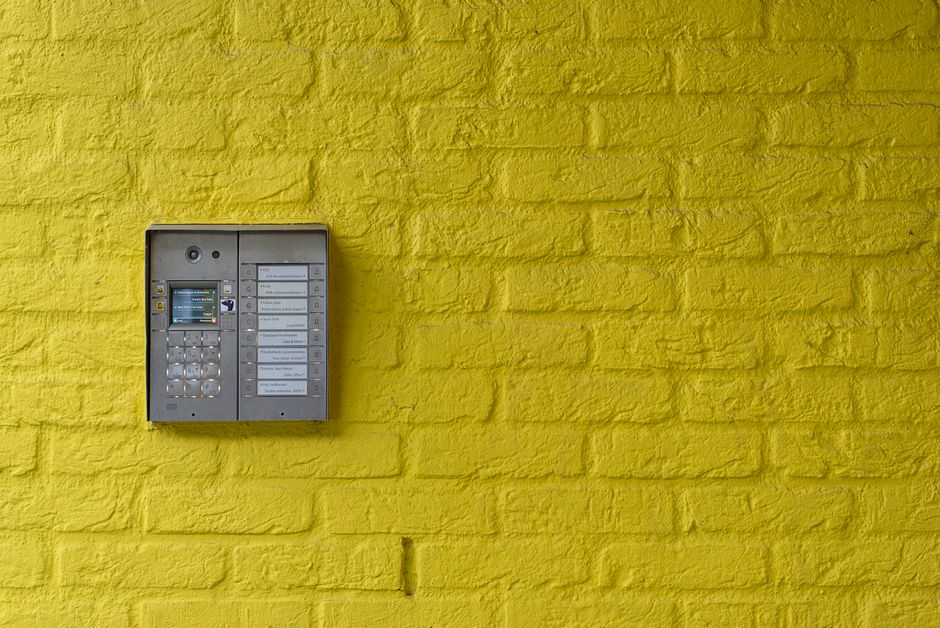
- “You will need to use the buzzer. Who are you visiting?”
The first version is the most universally usable. It assigns the gatekeeping to “building policy” rather than to you personally. Almost every legitimate person will respond with something like, “Oh of course,” reach for their own key, and the situation resolves.
The third version is the most useful when the person clearly does not have a key. It politely puts the responsibility on them to identify who they are visiting, which legitimate visitors handle easily.
The script works because of the warmth that comes with it. The same words said coldly read as suspicion. The same words said with a smile read as polite enforcement of a shared rule. Practice saying the line warmly. The warmth is what keeps the interaction friendly.
The legitimate-visitor response
If the person is a legitimate visitor (a guest of a resident, a delivery person, a contractor), they will respond predictably. A guest will say which unit they are visiting and use the intercom. A delivery person will identify themselves and ask for the unit. A contractor will mention which resident hired them.
None of these responses requires you to verify the truth. You have done your part by directing them to the proper channel. The intercom system, the resident, or the building staff handles the verification. Your job ends at the door.
If a visitor seems frustrated by being asked to use the intercom, that frustration is misplaced. Every secure building works this way. A legitimate visitor will adjust quickly. A frustrated response is itself a small signal worth noticing.
The “I forgot my key” pattern
A common tailgating pattern is the person who claims to live in the building but forgot their key. This is one of the most carefully designed social manipulations because it puts the resident in the position of either accepting the claim or seeming to call the person a liar.
The script handles this too. “Oh no problem, just use the buzzer for your unit.” If they are a resident, they have a neighbor or roommate who can buzz them in. If they are not a resident, they cannot answer this question convincingly. Either way, the responsibility shifts back to where it belongs.
You can also offer to call the building manager if there is one. “I can ring the front desk and they can let you in.” A legitimate resident will accept this without issue. A non-resident usually backs off.
Do not personally let in someone who claims to live there. The cost of being wrong is the entire building’s security. The cost of asking them to use the proper channel is a thirty-second inconvenience for a real resident.
The contractor and delivery patterns
Contractors and delivery people are common tailgaters because they often expect to be let in for convenience. Most legitimate workers have a process. UPS and FedEx drivers typically use a building access code or call ahead. Contractors usually arrange entry with the resident or building manager in advance.
The script for these situations is, “Which unit are you delivering to?” or “Who is your client?” If the answer is specific (a unit number or a resident name), redirect them to the intercom or front desk. If the answer is vague, redirection matters more, not less.
Avoid the common trap of holding the door for someone in a uniform. Uniforms are easy to acquire. The verification is the destination, not the appearance.
What to do if someone follows you in despite the script
If someone physically pushes through behind you despite your redirection, do not engage further. Walk to your unit. Once you are inside, alert building management or front desk if you have one. If the situation feels actively unsafe, contact local police non-emergency or emergency line depending on the severity.
Do not chase the person, demand they leave, or attempt to physically remove them. Most situations resolve when the building staff or other residents become aware of an unauthorized person. Your safety is more important than enforcing the door.
Document what you saw afterward. A short note to building management with the time, what the person looked like, and what direction they went helps the building respond. It also creates a record if the same pattern repeats. Reference: Ready.gov’s guidance on reporting suspicious activity.
The neighbor recognition layer
The script is easier when you recognize most residents in your building. The unknown face is the one you ask. The known neighbor is the one you nod to and hold the door for without question.
Knowing your neighbors (covered in the hallway hello and remember-the-name articles) makes the tailgating question much simpler. The unfamiliar face becomes more visible. The script is reserved for the actual unknowns.
In larger buildings where full recognition is impossible, the script is more universally needed. Use it for anyone you do not recognize, even at the cost of occasionally redirecting a resident who simply has not crossed your path before. They will not be offended. They have probably done the same thing.
The building-wide effect
If most residents in a building use some version of this script, the building’s entry becomes meaningfully secure. The opportunistic incidents that depend on tailgating drop dramatically. The building feels different. The lobby is calmer. The residents trust each other more because everyone is playing the same role.
If you are one of the first in your building to start using the script, you may feel like the strict one. You are actually the responsible one. Over time, other residents will pick up the pattern. The building gradually shifts to a more secure default.
This is one of the small ways individual residents shape the culture of a building. The choice to use the script is a small act of building citizenship. The script costs you a minute occasionally. The benefit, both to your own security and to everyone else’s, is real and durable.
Frequently asked
Is it rude to refuse to hold the door?
In a secure apartment building, no. The building's expected behavior is that each entrant uses their own credentials. Holding the door is the actual rule-breaking.
What if the person says they live in the building?
Direct them to the buzzer or front desk. Do not personally verify. A real resident has a neighbor or staff who can let them in.
What if I held the door and then realized the person was not a resident?
Mention it to building staff or management. They can sometimes locate the person on cameras or in the building. Apologize quickly; building staff understand that the polite reflex is strong.
Does this work in buildings without an intercom or front desk?
Yes, the script still works. The redirection is to "use your own key or call the unit you are visiting." The lack of a formal verification system does not change the basic role of the entry door.
Related guides
 Community Safety
Walking Home Late: Honest, Non-Paranoid Habits
Walking home late is normal city life and rarely as dangerous as fear suggests. A grounded look at the habits…
 Community Safety
Reading Your Building: A Calm Way to Notice Patterns
Noticing patterns in your apartment building is a quiet skill that improves your safety and your sense of belonging. A…
 Community Safety
Why Loud Hallways Sometimes Mean Safer Hallways
A quiet hallway feels safe but a hallway with normal life sounds is often the safer one. A grounded look…