Renting With a Pet: Building Reality Versus Listing Promises
A "pet-friendly" listing is the beginning of a conversation, not a final answer. The realities of renting with a pet are more nuanced than most listings imply.


If you are about to rent with a pet, or if you are weighing whether your current building is the right one, the realities are worth understanding before you sign. Here is what the listing usually does not tell you and what to look for in any building advertised as pet-friendly.
What “pet-friendly” actually means in most listings
In most cases, “pet-friendly” means three things, and only those three. The building allows pets. The lease includes a pet clause. The building may charge a pet deposit and a monthly pet fee.
It does not necessarily mean that the building is set up to accommodate pets gracefully. It does not mean other residents are pet-people. It does not mean there are amenities for pets, like dog-walking areas, pet wash stations, or pet-related events. Most buildings that include those amenities use a stronger phrase like “pet amenities” or “pet community.”
Reading the listing carefully and asking specific questions in the application phase clarifies a lot. What is the pet deposit? What is the monthly pet fee? Are there weight or breed restrictions? Is there a designated relief area on the property? Can pets be in shared areas like the lobby, the laundry room, the rooftop?

The hidden cost stack
Pet costs in apartments stack up in ways listings rarely advertise. A typical pet-friendly building in many cities charges between $300 and $700 in upfront pet deposits, plus $25 to $75 monthly pet rent. Over a typical lease, this can total $1000 or more above the base rent.
Some buildings also charge per pet, so two cats can double the cost. Some have annual pet fees that are not refundable. Some require renter’s insurance with pet coverage, which adds another small monthly cost.
None of these are deal-breakers, but knowing them upfront prevents budget surprises. Add the full pet cost stack to the base rent when comparing buildings. The cheapest base rent is sometimes the most expensive pet rent, and vice versa.
Some pet deposits are refundable. Some are not. Some are partially refundable depending on the condition of the unit at move-out. Ask directly during the application phase. The answer affects how to think about the total cost.
The neighbor question
A pet-friendly building does not mean a pet-loving building. Many residents in pet-friendly buildings are not pet people. They tolerate pets because the building allows them. They may dislike encountering your dog in the elevator. They may complain if your cat’s scratching is audible through a wall. They may be allergic.
If you can visit the building during typical commute hours, look at how residents interact with the pets they see. Are people moving away from dogs in the elevator? Are there pet-positive signs in the lobby? Is the building staff comfortable around pets? These small cues tell you more about the actual culture of the building than the marketing material does.
What to check about the unit itself
A pet-friendly unit has specific features that matter. Walk through with your pet in mind:
- Is there a hard-surface floor, or carpet? Hard floors are easier to clean and resist pet damage but echo for cats and dogs. Carpet is softer but stains and absorbs odors.
- Where is the unit relative to the building entrance? A short walk for dog walks is better than a long one.
- What floor is the unit on? Ground floor is easier for dog walks but louder for cats who watch the world. Upper floors are quieter but require elevator etiquette every time.
- Are there nearby green spaces? A patch of grass within a few blocks matters for daily dog walks.
- How is the noise transmission? Above another unit, your pet’s footsteps will be heard. Below another unit, you may hear theirs.
- Is there a balcony? Balconies can be wonderful for pets but require cat-proofing or dog gates depending on the species.
The dog-walking reality
Dog ownership in an apartment is fundamentally a multiple-times-per-day commitment. You will walk your dog before work, mid-day if possible (or pay a walker), in the evening, and once more before bed. Each walk is a small project that depends on the building’s layout.
A building with a small elevator that you wait three minutes for makes a five-minute dog walk into a twenty-minute project. A lobby that requires you to greet the doorman with a pulling puppy is its own daily negotiation. A neighbor in the corridor who is anxious about dogs is a small interaction you will repeat hundreds of times per year.
If you are considering a building with a dog, do a full mock walk during a visit. Take the elevator from the floor of the unit you might rent. Walk through the lobby. Exit the front entrance. Walk to the nearest grass. Time the whole thing. You will learn whether the building is workable for your dog’s needs.
The cat questions
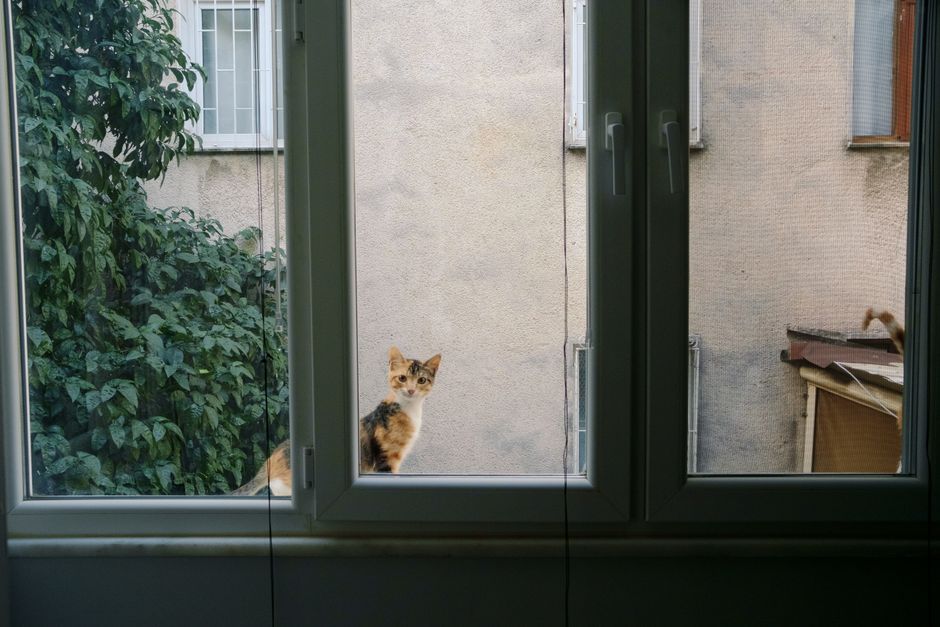
Cats are usually easier in apartments than dogs but have their own considerations. The litter box location matters for both you and your neighbors. Loud cats (Siamese, Bengals, some Ragdolls) can be heard through walls more than people expect. Window perches are a near-necessity in apartments, so window sills, security, and screening matter.
If your cat is allowed on a balcony, the screening needs to be cat-safe. Cats jump higher and squeeze through smaller gaps than people realize. A cat-proof balcony enclosure is a one-time investment that prevents catastrophic accidents.
Cat odors are also a building consideration. Litter boxes need to be cleaned daily in an apartment. The smaller space and reduced ventilation mean that a litter box that would be fine in a house becomes a problem in an apartment within a day.
The lease pet clause
The pet clause in your lease is worth reading carefully. Common provisions include:
- Breed restrictions, especially for dogs perceived as aggressive.
- Weight limits, often 25 to 50 pounds.
- Number of pets allowed per unit.
- Required vaccination records.
- Restrictions on shared areas (some buildings ban pets from the pool, gym, lobby).
- Damage liability and the conditions under which the pet deposit can be withheld.
- The landlord’s right to require the pet be removed if it becomes a nuisance.
Negotiate where possible. Some clauses are firm. Others are flexible. A friendly request to waive a specific clause (a slightly heavier dog, a breed not on the approved list) sometimes succeeds, especially if you can show vaccination records, training certifications, and references from a previous landlord. Reference: Nolo’s landlord-tenant legal encyclopedia covers typical pet clause provisions and how negotiability varies by state.
The deposit and the move-out math
At move-out, the pet deposit becomes the focal point of the relationship with your landlord. Most pet damage claims are about flooring (urine stains, scratches), trim (chewed corners), and odors that require professional cleaning. Document the unit thoroughly at move-in (see the walkthrough article). Address issues during your tenancy promptly. Have the unit professionally cleaned before move-out if your lease requires it.
A well-maintained unit with documented condition tends to result in a fair deposit return. A unit with chronic accidents, untreated stains, or visible damage will lose deposit money regardless of how good the relationship has been otherwise. Pet-related deposit disputes are some of the most common landlord-tenant frictions and worth preparing for.
The right building for your pet
The right pet-friendly building for you is the one where the daily realities work for your animal, not just the legal ability to bring them in. Walk distances. Elevator dynamics. Neighbor culture. Hard surface floors. Quiet hallways. Window access. These small things matter every day. The marketing label matters at signing. The match between your pet and the building is what makes the next year actually livable for both of you.
Frequently asked
Is the pet deposit always refundable?
No. Some pet deposits are non-refundable fees. Others are partially refundable based on the condition at move-out. Always ask before signing.
Can a landlord evict me if my pet becomes a nuisance?
In most jurisdictions, yes, if the lease has a nuisance clause. The pet may need to be removed before the resident, but in serious cases the landlord can require both.
What if my pet has an accident that stains the floor?
Address it immediately and document the repair. Pet-stain enzymes work well for fresh accidents. Some stains can be professionally treated. Document your remediation in case of move-out disputes.
Are emotional support animals exempt from pet rules?
In many jurisdictions, properly documented emotional support animals are protected and may be exempt from some pet rules. The documentation requirements vary. Consult a local tenant resource for specifics.
Related guides
 Apartment Living
A Renter’s Guide to Mold: How to Spot It, Report It, and Get It Fixed
Mold in a rental is one of those problems that feels alarming the moment you notice it and confusing the…
 Apartment Living
The Trash Chute Rules No One Tells You
The trash chute has a quiet set of rules that nobody explains in advance. A practical look at how to…
 Apartment Living
The Bathroom Fan You Should Actually Be Running
Most apartment bathroom fans are used for thirty seconds during a shower and then turned off. The right pattern looks…