Holiday Decorations and the Polite Range
Holiday decorations are joyful in the right scale and a quiet source of conflict in the wrong one. The polite range is wider than you think but it is real.


Every December, our street is briefly transformed. By the second week of the month, most front porches have something on them. A wreath, a string of soft white lights, a small inflatable snowman that mysteriously deflates at night. By the third week, three or four houses have escalated. There is a house at the end of the block that puts up an entire holiday tableau with a soundtrack. The neighbors on either side of it have, over the years, learned to laugh about it. They have also, quietly, told each other that they were grateful when the tableau came down on January 4.
Holiday decorations live in a strange social zone. They are openly visible. They are temporary. They are joyful. And they have very real effects on the people across the street and in the next unit. The polite range is wider than most rule books suggest and narrower than most enthusiasts realize.
What counts as the polite range
The polite range is roughly defined by three rules. First, your decorations end at the edge of your visible footprint. They do not pour into a shared yard or a hallway that other residents have to walk through. Second, they have a defined start date and end date, and you stick to it. Third, they do not generate sustained noise or light intrusion that other people cannot opt out of.
Within those rules, almost anything goes. A modest wreath, a few outdoor lights, a window display, an inflatable, a holiday flag. Even a larger display is fine as long as it stays inside your edge and turns off by a reasonable hour. The problems start when one of the three rules quietly slips.
Light pollution is the most common quiet conflict
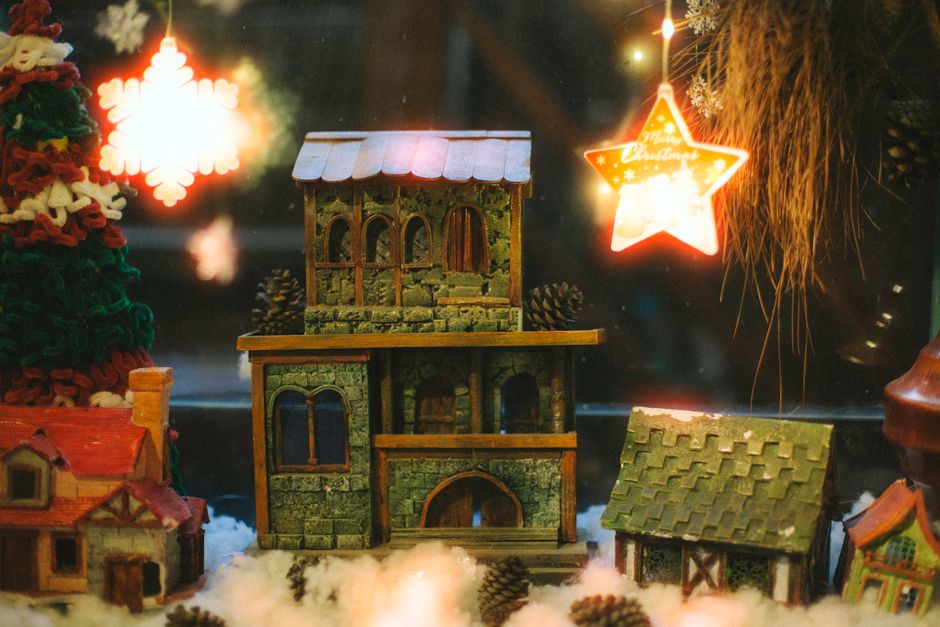
Lights are the holiday element most likely to cause real friction. A bright string of lights that wraps a porch is lovely. The same lights pointed directly into a neighbor’s bedroom window, on all night, are something else. Most people do not realize that their decorations are shining into a neighbor’s room. They installed the lights from inside their own yard. They never stood across the street to look.
The fix is to take a walk. After the lights are up, on the first night, stand in front of every neighbor’s window and look at what you have done. If their bedroom is lit by your string lights, point yours differently or use a lower bulb count. Better still, install them on a timer that turns off by 10pm. By that hour, the only people seeing your lights are coming home late or up too early. Both groups appreciate the dark.
A simple outdoor timer plug, set to turn off your lights at 10pm or 11pm, eliminates most of the holiday-decoration complaints that ever reach a building or HOA. They are inexpensive, easy to install, and they let you keep the warm hours of the display without crossing the line into intrusion.
Inflatables, animatronics, and the question of scale
Inflatables are joyful in small doses. They turn the front yard into a slightly absurd scene that children love. They also have practical limits. An inflatable Santa next to a small reindeer is delightful. An inflatable Santa next to a snowman next to a polar bear next to a sleigh is starting to make the yard look like a parking lot. Two or three pieces is usually the polite ceiling. Past that, you are running a small theme park, and your neighbors, even the polite ones, are quietly wishing for January.
Animatronic displays add a different problem. Most of them have a noise element. A character that sings, an audio track that loops, a motorized motion. These travel further than people think. If your animatronic piece plays the same fourteen-second loop every minute, the neighbor across the street is hearing it every minute. By night three, even the most patient neighbor is starting to grit their teeth. Use the motion. Turn off the audio, or limit it to a narrow daytime window.
Apartment-specific etiquette
Apartment decorations have a different polite range. Hallways are shared, so most apartment buildings ask that decorations stay either inside your unit or on your door. A wreath, a small banner, a ribbon. These are fine almost everywhere. What is not fine, in most buildings, is anything that occupies the hallway floor or blocks fire safety equipment. Reference: the NFPA’s winter holiday fire-safety guidance.
Inside the unit, decorate freely, but be mindful of windows facing other units. A blinking light in a window directly across from another apartment can flicker into someone’s living room all evening. Steady soft lighting is almost always better than blinking lighting for shared environments. Save the flicker for environments where nobody is sleeping nearby.

The HOA and condo questions
If you live in an HOA or a condo, check the rules before you go large. Many associations have specific guidelines about size, season, and visibility. Some have strict rules about lights being off by a certain hour. Some prohibit anything affixed to the exterior of the building. The rules are not always intuitive, but they exist because of past disputes. Reading them once at the start of the season saves you from a polite letter later.
If you disagree with the rules, the time to raise it is during an HOA meeting in the spring or summer, not three days before a holiday display goes up. Disputes raised in the middle of the season tend to be emotional. Disputes raised in the off-season tend to be productive. The same rule applies to anything else governed by an association.
What to do if a neighbor goes too far
If a neighbor’s decorations are crossing the line into your space (light into your bedroom, noise reaching your unit, displays creeping into the shared walkway), bring it up directly and warmly. A line like, “Hey, the lights look great. One thing though, they shine right into our bedroom window at night. Would you mind angling them down a little, or putting them on a timer?” lands well because it opens with a compliment and ends with two specific options.
Avoid the temptation to ignore it the first year and stew. The neighbor will assume the lights are fine and they will put them up again next year, larger. A short conversation in mid-December resets the pattern.
If the situation is more serious (something blocking a fire exit, an audio track that runs through quiet hours, a display that has been up since October and shows no sign of coming down), it is fair to mention it to building management or the HOA. Document the specifics. The earlier the issue is raised, the easier it is to handle quietly.
Pre-season checklist for a polite display
- Walk the block after your lights go up and stand in front of each neighbor’s window to see exactly what your display shines into.
- Put every outdoor light string and inflatable on a timer set to switch off between 10 p.m. and 11 p.m. on weeknights.
- Skim your lease, HOA rules, or building policy for restrictions on size, hours, attachment methods, and end dates before you buy new pieces.
- Keep hallways, stairwells, breezeways, sprinkler heads, and any marked exit fully clear of wreaths, mats, or wrapped packages.
- Cap yard inflatables and animatronic figures at roughly two or three pieces so the lawn does not read as a theme park.
- Mute looping audio tracks or limit them to a short daytime window so a fourteen-second loop does not drift into every neighbor’s evening.
- For window displays facing another unit, choose steady soft lighting over blinking, chasing, or color-cycling bulbs.
- Add a calendar reminder for the second weekend of January to take the whole display down before it starts reading as inertia.
The end-date problem
The most universal quiet complaint about holiday decorations is the end date. Many displays go up early. Most come down late. The polite range for taking decorations down is usually within a week or two after the relevant holiday. By mid-January, the wreaths should be gone. By the end of January, the lights should be down. By mid-February, anything still up reads as inertia.
If you find yourself in late January with the decorations still up, it is almost always because the weekend you planned to take them down was cold or busy. Pick the next available reasonable evening. The neighbors notice. They will not say anything, but they will notice when the lights go down. The block will return to its winter quiet, and you will have stayed inside the polite range for another year.
Frequently asked
How early is too early for holiday decorations?
Mid-November is usually fine for soft outdoor lighting. Full holiday displays, especially with strong themes, read as early before about the last week of November. There is no universal rule, but a slow build is read as more thoughtful than a sudden full deployment.
Are there any HOA rules I should ask about specifically?
Look for rules on display height, anchoring (no nails into the building), light hours, audio components, and the maximum number of inflatables. These are the most commonly regulated specifics across associations.
What about cultural holidays my building does not celebrate?
The same polite range applies. Most buildings welcome respectful displays from any tradition as long as they stay inside the resident's footprint and follow the standard hours.
Can a building prohibit holiday displays entirely?
Yes, especially for shared hallway and exterior surfaces. Most leases give building owners broad discretion over the appearance of common areas. Inside your own unit and on your own door, most buildings are flexible.
Related guides
 Neighbor Etiquette
How to Be a Considerate Neighbor When You Work From Home
Working from home changes your relationship with the building. For years you may have left in the morning and come…
 Neighbor Etiquette
The First-Week Wave: How to Introduce Yourself to New Neighbors Without Making It Awkward
Meeting new neighbors during the first week sounds simple until you are standing in the hallway with a casserole, second…
 Neighbor Etiquette
Driveway Etiquette in a Tight-Spot Neighborhood
Driveways and tight parking are the quiet source of most suburban neighbor conflicts. Small habits and clearer expectations resolve almost…